
Palestinian goods span more than a thousand years of craft tradition — ceramics, art, clothing, leather, embroidery, olive wood, and kufiyas, all made in Palestine by people who are still there. This guide covers every major category, who makes it, and where to find the real thing.
There is a version of "Palestinian goods" that is almost entirely symbolic — mass-produced kufiya-print items manufactured in China and sold under vague solidarity branding. And then there is the real thing: Palestinian goods made in Palestine by Palestinians who have not left, who are still in their workshops, still passing their skills to the next generation.
This guide is about the second kind. It covers the full range of authentic Palestinian products available today — from ceramics and art to clothing, leather, jewellery, and the kufiya itself — and explains what makes each category worth knowing about.
What Makes Something a Palestinian Good?
The simplest answer: it was made in Palestine, by Palestinian hands, using craft traditions that originate in the land. That excludes items merely branded with Palestinian symbols — the watermelon, the kufiya pattern, the flag colours — without any actual connection to Palestine or Palestinian craftspeople.
Authentic Palestinian goods come from specific workshops in specific cities: Hebron (الخليل), Jerusalem (القدس), Bethlehem (بيت لحم), Nablus (نابلس), Ramallah (رام الله), and the villages of the West Bank. Each city has its own craft traditions — Hebron for glassblowing, weaving, and leatherwork; Bethlehem for olive wood carving and Palestinian embroidery; Nablus for soap and its centuries-old ceramic tile tradition.
When you buy Palestinian products that are genuinely made in Palestine, the purchase is direct: it reaches a specific person, in a specific place. That directness is not sentiment. It is economics — and it matters.

Hirbawi kufiya factory in Hebron - the last Palestinian kufiya manufacturer, weaving since 1961
Palestinian Ceramics
Palestinian ceramics are one of the oldest and most documented craft traditions in the region. The ceramic heritage of Palestine goes back thousands of years — hand-painted tilework from Jerusalem's Old City, glazed bowls from the Hebron workshops, the distinctive blue-and-white patterns influenced by Ottoman and Byzantine traditions that are still produced today.
Contemporary Palestinian ceramic art ranges from the traditional — painted palestinian ceramic plates and palestinian ceramic bowls made in Hebron and Jerusalem — to the functional everyday pieces available through the Sumud Stories collection:
- Sumud Al Quds Ceramic Trivet — Painted with the rooftops of Jerusalem (القدس, Al-Quds). Handcrafted and functional — a trivet for your table and a piece of the city for your home.
- Sumud Dar Ceramic Magnet — "Dar" means home. A small hand-painted ceramic magnet shaped like a Palestinian house.
If you are specifically looking for Palestinian ceramic tiles or larger decorative pieces, the Hebron and Jerusalem ceramic workshops are the primary source — and pieces from these workshops do occasionally appear in the Sumud Stories curated range.
The Sumud Stories collection draws heavily from Palestinian artistic traditions — naming pieces after Ghassan Kanafani, after the Palestine sunbird, after the river and the sea that define the geography of the land. These are objects that teach the story of Palestine.

The Kufiya — Palestine's Most Recognisable Export
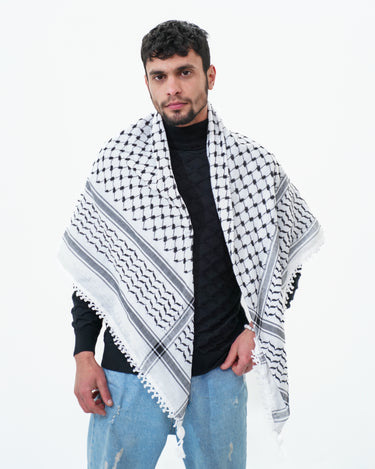
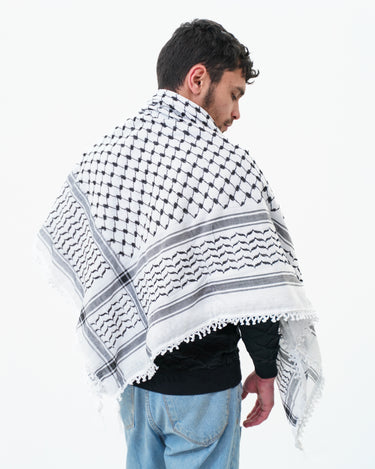
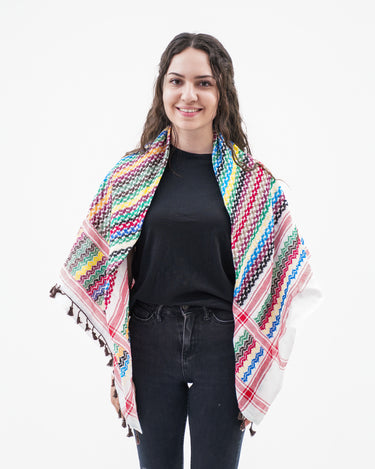
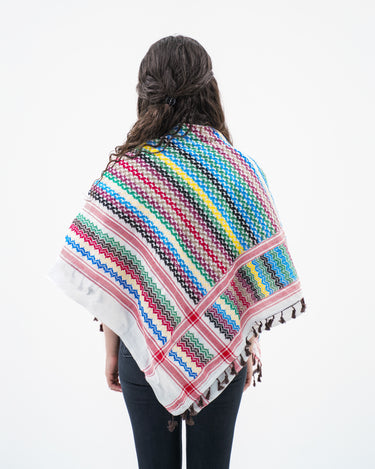
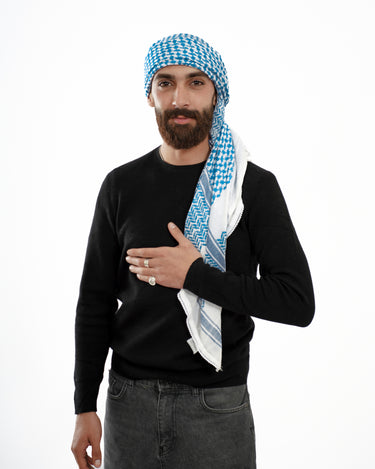
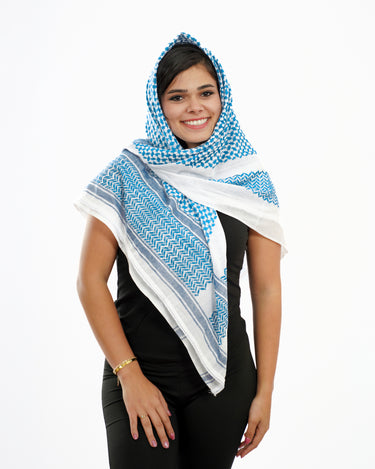
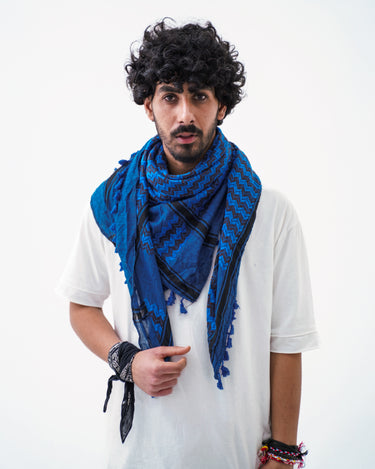
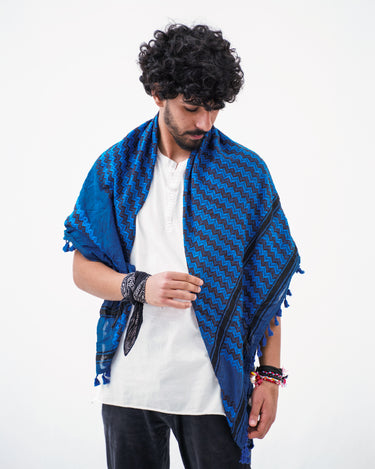
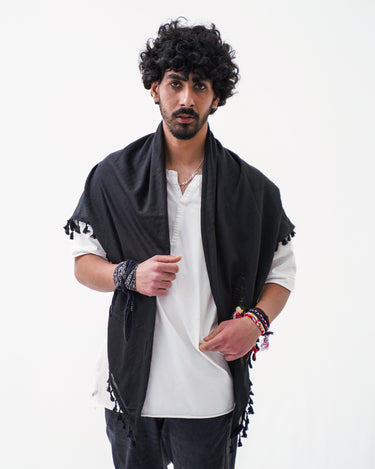
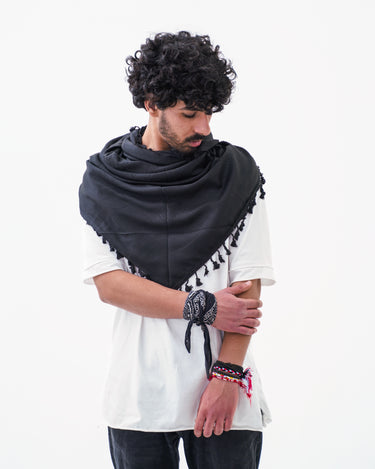
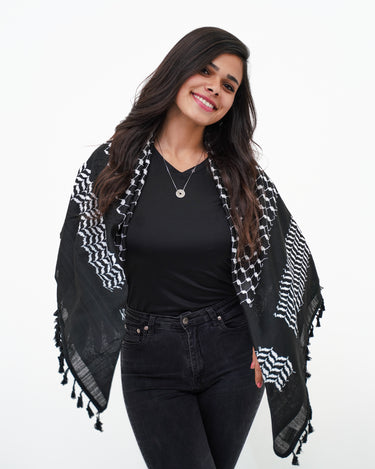
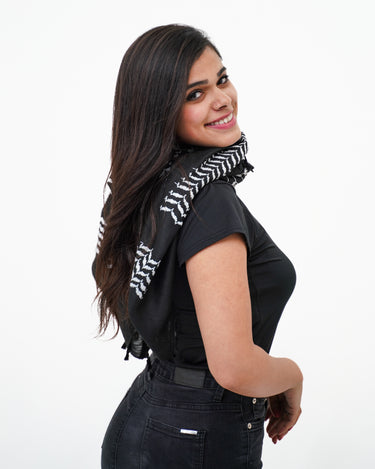
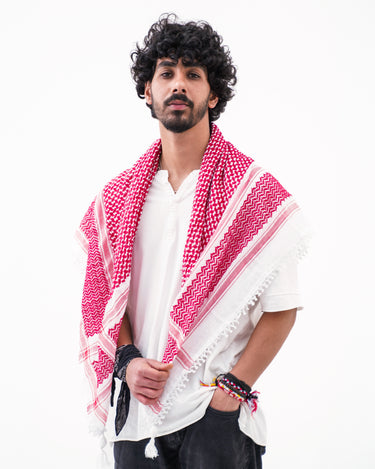
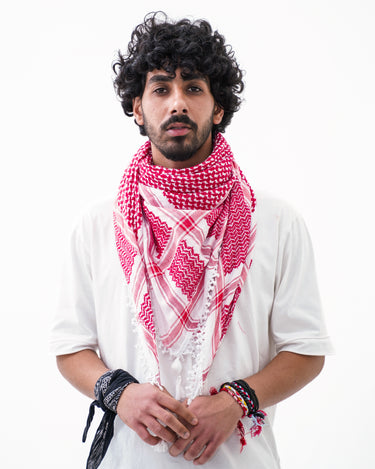
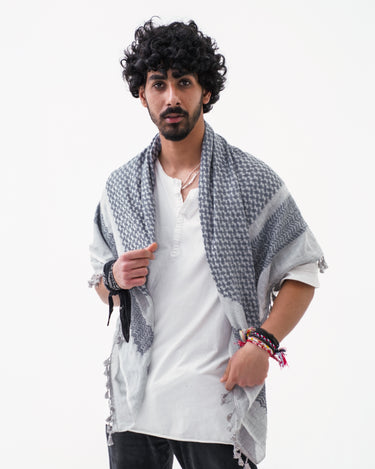
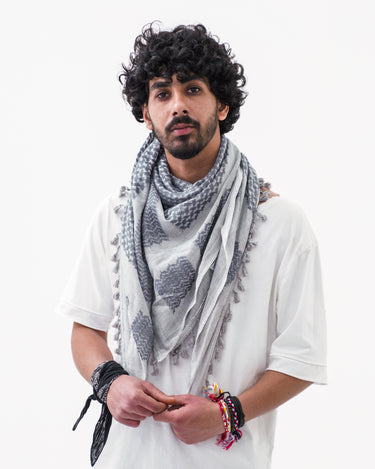
The kufiya (also written keffiyeh, kufiyah) is the starting point for most people discovering Palestinian goods. Its black-and-white fishnet pattern is one of the most globally recognised symbols of the 20th century, and yet almost all kufiyas sold in the world today are manufactured in China or Bangladesh.
There is one exception: Hirbawi®, operating in Hebron since 1961 — the last kufiya factory in Palestine. Every kufiya from Hirbawi is woven on the same looms, in the same city, by the same family that started this in the 1960s. They are heavier, tighter, and more durable than the mass-produced alternatives. The difference is visible the moment you hold one.
Shop the full Hirbawi® Kufiya collection →

Palestinian Clothing
Palestinian clothing has a deep and layered tradition. Historically, Palestinian women's dresses — the thobe (ثوب) — were embroidered with tatreez (تطريز) patterns specific to each village, creating a visual geography of belonging that could be read by those who knew the code. Palestinian men's clothing included the kufiya as both practical head covering and cultural marker.
Today, Palestinian clothes available internationally range from the traditional to the contemporary. Within what's available online:
- Embroidered Palestinian apparel from PalStitch™ — hoodies, t-shirts, and bags carrying tatreez needlework from specific Palestinian cities. These are Palestinian clothing items made to be worn daily while carrying their origins visibly.
- The kufiya itself — the most internationally portable piece of Palestinian clothing, worn across genders and geographies.
For Palestinian clothing online, the Hirbawi shop at kufiya.org carries the most complete range of wearable Palestinian goods available for international shipping — from the kufiya to tatreez-embroidered apparel and accessories.
- PalStitch™ Homeland Stitched T-Shirt — Tatreez-embroidered tee, worn as a daily statement.
- PalStitch™ Sabr Hoodie — "Sabr" (صبر) means patience. Embroidered, comfortable, and named with intention.
- PalStitch™ Fallahi Hoodie — "Fallahi" means rural, of the land — a tribute to the farmers who stayed.
- Sumud Watermelon Stitched T-Shirt — The watermelon as Palestinian symbol, embroidered on a Sumud Stories tee.
Palestinian Embroidery — Tatreez
Tatreez (تطريز) is the traditional embroidery of Palestine and one of the most significant art forms in Palestinian culture. Each village historically had its own patterns, colours, and stitch conventions — a visual language of belonging. Today, tatreez is practised by Palestinian women in the West Bank, in Gaza, and in diaspora communities as an act of cultural memory.
PalStitch™ brings tatreez into contemporary everyday objects — tote bags, pouches, and apparel embroidered with patterns from specific Palestinian cities and regions.
- PalStitch™ Gaza Tote Bag — Embroidered with Gaza-specific tatreez patterns.
- PalStitch™ Al-Khalil Tote Bag — Al-Khalil (Hebron) patterns, on a bag made to be used daily.
- PalStitch™ Jeba Tote Bag — Jeba is a village in the northern West Bank. Each bag keeps its patterns specific.
- PalStitch™ Baraka Embroidered Pouch — "Baraka" means blessing. A smaller embroidered pouch for daily carry.
- PalStitch™ Kufiya Embroidered Pouch — Tatreez meets the kufiya pattern in a compact pouch.
Browse all Palestinian embroidery from PalStitch™ →

PalStitch Palestinian embroidered tote bags - tatreez needle work on everyday bags
Palestinian Leather Goods
Hebron has a long tradition of leatherwork. The city's tanners and craftsmen produced leather goods for generations, and that tradition continues in the workshops behind Sumud Stories™ — Hirbawi's curated line of Palestinian artisan goods.
The leather pieces are understated and daily-use: wallets, keychains, organisers, clutches, sleeves. Each carries kufiya-pattern detailing as a mark of origin — quiet, not performative. These are objects made to be used for years.
- Sumud Masari Leather Wallet — The signature wallet. Handstitched, kufiya-patterned, built to last.
- Sumud Safar Travel Wallet — Larger format, for documents and boarding passes. A travel companion made in Palestine.
- Sumud Sahla Leather Sleeve — A laptop or tablet sleeve that travels well and ages better.
- Sumud Kufiya Leather Organizer — Desk organiser with the kufiya weave pressed into the leather.
- Sumud Juzdan Leather Clutch — Evening-ready, minimal, handmade.
- Sumud Watan Keychain — The smallest Sumud Stories piece, and one of the best gifts.
- Sumud Rasid Eyewear Case — A leather glasses case that protects what you look through.
- Sumud Leather Bookmarks — For the reader in your life.
Browse all Palestinian leather goods in the Sumud Stories™ collection →

Palestinian Jewellery
Palestinian jewellery has a distinct vocabulary: copper and brass worked locally, stone and ceramic combined with metal, forms drawn from the landscape — the sunbird, the olive tree, the silhouette of the land itself. The Sumud Stories jewellery line brings several of these traditions into everyday-wearable pieces.
- Sumud Ard Falasteen Necklace — The shape of Palestine, worn close to the heart. "Ard Falasteen" means "land of Palestine."
- Sumud Sunbird Necklace — The Palestine sunbird (طائر الشمس) is the national bird of Palestine. Delicate and specific.
- Sumud Copper Kufiya Bracelet — Copper, stamped with the kufiya weave pattern. Worn daily, built to develop patina.
- Sumud Copper Kufiya Ring — The same pattern, smaller. Quiet and precise.
- Sumud River & Sea Earrings — Named for the River Jordan and the Mediterranean — the geographic borders of Palestine.
- Sumud Waraqa Earrings — "Waraqa" means leaf. Pressed copper, shaped like what grows from the land.
- Sumud Hisham Mosaic Necklace — Inspired by the mosaics of Hisham's Palace in Jericho, one of the great treasures of Palestinian heritage.
- Sumud Taffouh Stone Necklace — "Taffouh" means apple. Natural stone, worked in Palestine.
- Sumud Kanafani Keychain — Named for Ghassan Kanafani, the Palestinian writer. A piece with a name that teaches.

Sumud Stories Palestinian jewellery - copper bracelet, ring, and necklaces made in Palestine
Palestinian Olive Wood
Palestinian olive wood is one of the most distinctive materials in Palestinian craft. Palestinian olive trees are among the oldest cultivated trees in the world — some groves in the West Bank are over a thousand years old — and palestinian olive wood products have been carved, turned, and finished by craftsmen in Bethlehem and the surrounding villages for centuries.
Olive Wood Oasis™ produces hand-carved prayer beads from Palestinian olive wood:
- Olive Wood Oasis™ Prayer Beads (33-bead) — The standard prayer bead set, carved from Palestinian olive wood. Smooth, warm, and unlike anything synthetic.
- Olive Wood Oasis™ Prayer Beads (99-bead) — The full set of 99, for those who want to count every name.
Palestinian Fashion
Palestine fashion as it exists today is not a single aesthetic — it is a set of living craft traditions brought into contemporary wearable form. Palestine fashion brands operating today draw on tatreez embroidery, kufiya weave patterns, and the visual vocabulary of Palestinian cultural identity to create objects that are worn as both clothing and cultural statement.
Fashion in Palestine has always been tied to craft rather than industry — the dress makers, embroiderers, and weavers of Bethlehem, Hebron, and Ramallah represent a living design tradition that predates the fashion industry by centuries. What contemporary palestine fashion designers are doing is making that tradition portable and internationally visible.
For wearable Palestinian fashion available internationally, the kufiya and the PalStitch™ embroidered apparel range are the most accessible starting points. See the full collection at kufiya.org/collections/shop-palestine.

Where to Buy Palestinian Goods
The short answer: kufiya.org/collections/shop-palestine is the most complete collection of authentic Palestinian goods available online — all shipped internationally, all made by Palestinians in Palestine.
For the artisan goods specifically — the leather, ceramics, jewellery, olive wood, and embroidery — the Sumud Stories™ collection is the place to start. And for the kufiya, there is only one factory still operating in Palestine: Hirbawi®.
These are not symbolic purchases. They are transactions with people who are still there, still making things, in workshops that have survived more than most of us will ever face. Every order placed is a small piece of economic sumud — staying, through trade.
→ Explore all Palestinian goods from Sumud Stories™ — handcrafted in Palestine.