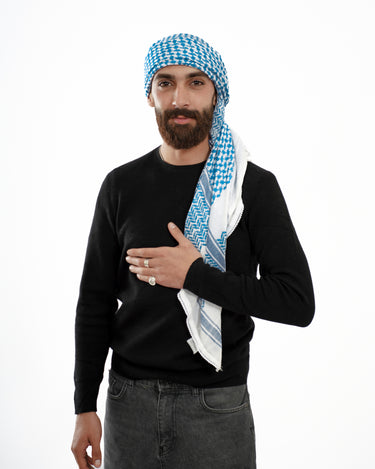
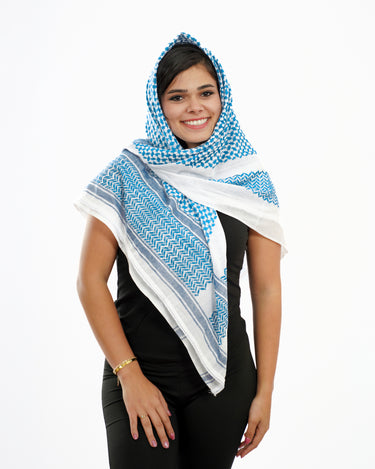
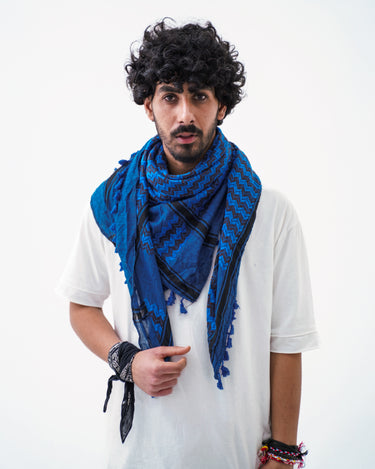
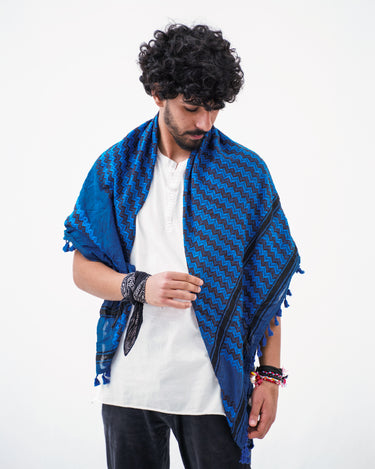
Warum die Keffiyeh-Farben wichtig sind
Die Keffiyeh – in Palästina als Kufiya bekannt – wird seit Jahrhunderten in der gesamten arabischen Welt getragen und hat in dieser Zeit Bedeutungsebenen angesammelt, die je nach Land, Gemeinschaft und Design variieren. Im Gegensatz zu einer Flagge, deren Symbolik offiziell festgelegt ist, entwickelte sich das Farbenvokabular der Keffiyeh organisch: durch Handelsrouten, lokale Landschaften, die Geschichte der Flüchtlinge und – mit den neueren Designs von Hirbawi – bewusste Hommagen an spezifische palästinensische Städte, Lager und Geschichten.
Die Farben zu verstehen, bevor man eine kauft oder trägt, geht nicht darum, den Zugang zu beschränken. Es geht darum zu wissen, was man trägt. Dieser Leitfaden entschlüsselt jede einzelne Farbe, direkt aus der Geschichte hinter jedem Design.
Schwarz und Weiß: Die ursprüngliche palästinensische Keffiyeh
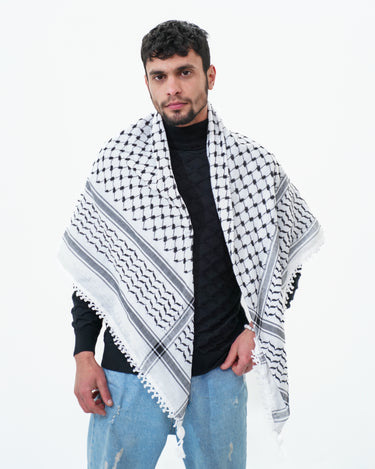
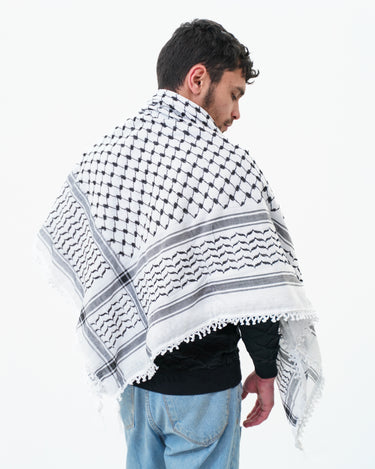
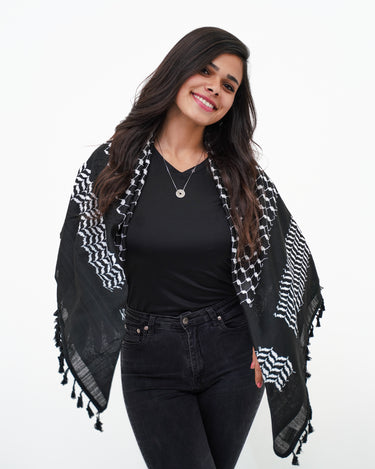
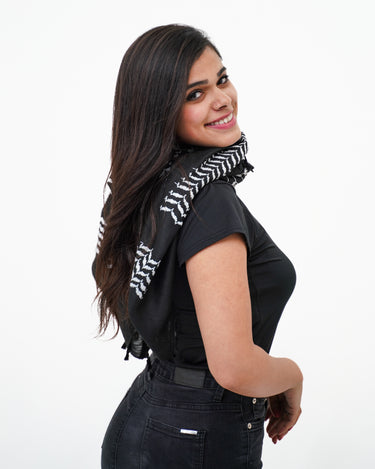
 Schwarz-weiße palästinensische Keffiyeh, gewebt in der Hirbawi-Fabrik in Palästina
Die schwarz-weiße Keffiyeh ist die weltweit bekannteste Version und die, die am stärksten mit der palästinensischen nationalen Identität verbunden ist. Ursprünglich von der ländlichen Bauernschaft getragen, wurde sie während des Aufstands der 1930er Jahre gegen die britische Kolonialherrschaft zu einem Symbol des Widerstands und ist seit den 1960er Jahren das ultimative Emblem der palästinensischen Revolution.
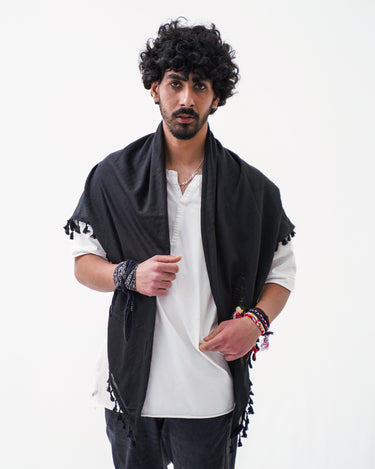
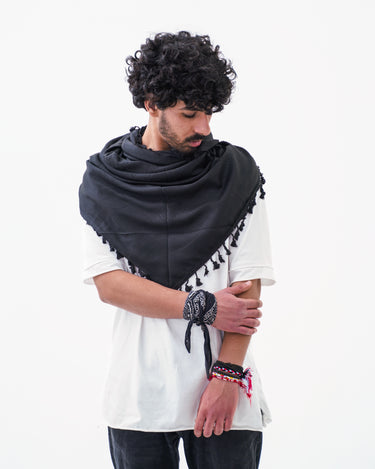
Hirbawi webt verschiedene Variationen des klassischen Musters: die Inverted Keffiyeh, entstanden, als Abu Mohammad Hirbawi bemerkte, dass ein Filmnegativ das Schwarz und Weiß eines traditionellen Designs vertauscht hatte, und es einfach nachbaute; die Pure Black, ein schwarzes Muster auf schwarzem Hintergrund für einen eleganteren, dezenteren Look; und die White Hirbawi Keffiyeh, ein ganz weißes Muster, das an die klassische Hirtenkopfbedeckung des Nahen Ostens erinnert.
→ Authentische schwarz-weiße Keffiyehs kaufen, gewebt in Palästina.
Rot und Weiß: Bedouin-Erbe
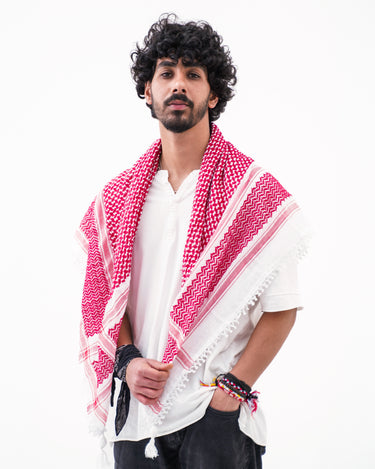
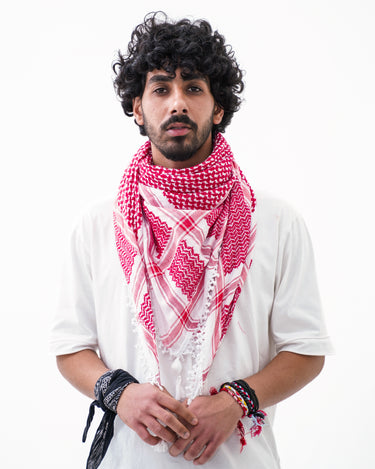
 Rot-weiße Keffiyeh, beduinische Ursprünge, hergestellt in der Hirbawi-Fabrik
Die rot-weiße Keffiyeh – in Jordanien als Shemagh oder Hatta bekannt – trägt eine andere Reihe von Assoziationen, die in der Beduinenkultur und auf der Arabischen Halbinsel verwurzelt sind. Der rote Farbstoff stammte historisch von einer lokalen Pflanze, und das dichte rote Karomuster auf weißem Grund wurde zum Standard für Beduinenstämme im heutigen Jordanien, Saudi-Arabien und den Golfstaaten.
In Jordanien ist die rot-weiße Keffiyeh ein nationales Symbol. Das jordanische Militär trägt sie, und sie erscheint in Trachten und bei offiziellen Zeremonien. Am Golf sind Variationen der rot-weißen (manchmal auch als Ghutra in reiner Weißform bezeichnet) alltägliche Kopfbedeckungen für Männer in Saudi-Arabien, den VAE, Kuwait und Katar, wo sie mit dem Agal getragen werden – der schwarzen Kordel, die das Tuch an Ort und Stelle hält.
Die rot-weiße Keffiyeh wird weniger mit politischen Solidaritätsbewegungen in Verbindung gebracht und mehr mit kultureller und nationaler Identität in der breiteren arabischen Welt. Sie ist nicht besser oder schlechter als die schwarz-weiße – sie spricht einfach eine andere Geografie und Tradition an.
→ Hirbawis rote Keffiyehs durchsuchen.
Blau: Das Meer, der Himmel und alltägliche Eleganz
 Die Yafa Hirbawi Kufiya, die die Küstenstadt Yafa repräsentiert
Blau zieht sich durch mehrere Hirbawi-Designs, die jeweils mit einer anderen palästinensischen Stadt und einem Gewässer verbunden sind. Die Tabariya Keffiyeh bezieht ihr Blau aus dem See Genezareth – ein weißes Fischernetzmuster auf tiefblauem Hintergrund mit kräftigen schwarzen Rändern, das eine Fischertradition ehrt, die bis in die Zeit Jesu zurückreicht. Die Yafa Keffiyeh verwendet ein lebhaftes blaues Zickzackmuster auf tiefschwarzem Hintergrund, um die Küstenschönheit von Jaffa einzufangen, der größten Stadt des historischen Palästinas vor der Nakba 1948. Die Nazareth Keffiyeh setzt ihr blaues Muster auf einen denimfarbenen Hintergrund, der den Charme der Stadt widerspiegelt. Und die Traditionelle Blaue kombiniert ein schwarzes Fischernetzmuster mit einem ruhigen blauen Hintergrund und blauen Quasten – was an die Weite des Meeres und des Himmels erinnert.
Blau erscheint auch in Hommage-Designs: Die Bethlehem-Keffiyeh mischt ein ruhiges Blau mit Safrangelb, Aubergine und Mintgrün, um den heiligen, friedlichen Charakter der Stadt einzufangen, und die Mar Elias-Keffiyeh setzt ein blaues Zickzackmuster auf einen lebhaften gelben Hintergrund als Hommage an das Mar Elias-Kloster aus dem 6. Jahrhundert südlich von Jerusalem
→ Die blauen Keffiyeh-Designs kaufen
Grau: Widerstandsfähigkeit und das Recht auf Rückkehr

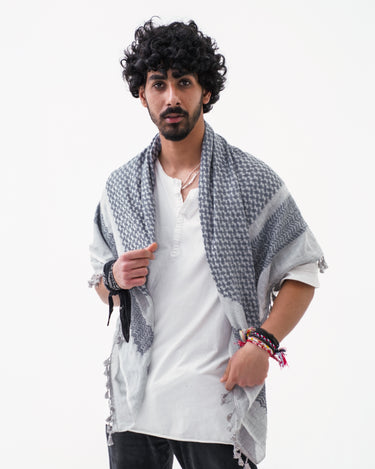
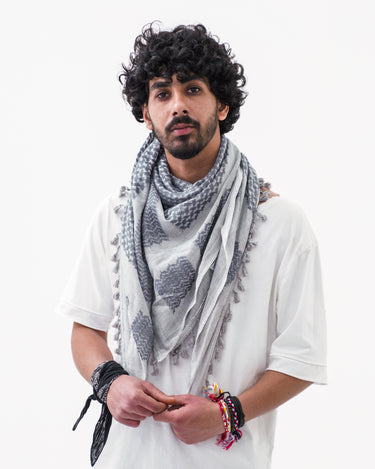
Hirbawis graues Dheisheh-Design ist inspiriert vom Flüchtlingslager Dheisheh
Die Dheisheh Keffiyeh – ein dunkelgrauer Hintergrund mit einem zickzackförmigen schwarzen Muster und hellgrauen Schnüren – ist nach dem Flüchtlingslager Dheisheh bei Bethlehem benannt. Sie ist eine Hommage an die Widerstandsfähigkeit, das Engagement für Bildung und den lebendigen Geist einer Gemeinschaft, die unter schwierigsten Bedingungen ihre Identität bewahrt hat.
Daneben kombiniert die Nablus Keffiyeh ein dunkelgraues Muster auf einem hellgrauen Hintergrund als Anspielung auf die Eleganz und Handwerkskunst, für die die Stadt Nablus bekannt ist, und die schlichte Graue Keffiyeh bietet eine raffinierte, vielseitige Interpretation des klassischen Schwarz-Weiß für diejenigen, die etwas dezenteres wünschen.
→ Die grauen Keffiyeh-Designs kaufen.
Die Flaggenfarben: Unsere Revolution und unser Kampf
 Hirbawi Palästina-Flaggen Keffiyeh – schwarz, rot und grün auf weiß
Eine Handvoll Hirbawi-Designs verwenden die Farben der palästinensischen Flagge direkt und unmissverständlich. Die Palästina-Flaggen Keffiyeh setzt Schwarz, Rot und Grün auf einen weißen Hintergrund – auf verschiedene Arten faltbar, um jedes Mal eine andere Farbe hervorzuheben. Die Hurriya Freedom Keffiyeh interpretiert die gleichen vier Flaggenfarben (Schwarz, Weiß, Rot und Grün) kreativer als Statement für den anhaltenden palästinensischen Kampf für Bewegungsfreiheit und Würde. Und die Palästina-Bestickte Keffiyeh stickt die Flagge selbst in traditioneller Tatreez-Nadelarbeit auf die klassische schwarz-weiße Basis.
→ Die Palästina-Flaggen Keffiyeh kaufen.
Gaza: Eine reiche und lebendige Kultur
 Hirbawi Gaza Keffiyeh – grün, gelb, rose und bordeaux, mit roten Schnüren
Die Gaza-Keffiyeh ist eines der markantesten Designs von Hirbawi, und ihre Farben werden oft fälschlicherweise als palästinensische Flagge interpretiert – das sind sie nicht. Das Muster ist grün, gelb, rose und bordeaux, mit roten Schnüren, die eine Hommage an die Liebe der Gaza-Bewohner zu scharfem Essen sind, wo Chili ein Küchengrundnahrungsmittel ist. Die Farbpalette ist eine Feier des Klimas und der kulinarischen Kultur Gazas, keine Flaggenreferenz. Es ist ein Design für Menschen, die Gaza direkt benennen und den fröhlichen, widerstandsfähigen Geist seiner Menschen feiern wollen.
→ Die Gaza-Keffiyeh kaufen.
Der Mar Saba: Ein Wüstenton, der sich mit dem Licht verändert
 Hirbawi Mar Saba Keffiyeh – gelbe und schwarze Fäden, die von Gelb zu Khaki und Oliv wechseln
Die Mar Saba Keffiyeh ist nach einem Kloster benannt, das in die Wüstenberge bei Bethlehem gehauen ist. Ihr Hintergrund ist aus gelben und schwarzen Fäden gewebt, die eine optische Täuschung erzeugen – sie wechselt je nach Lichteinfall von gelblich zu Khaki und Olivgrün. Sie hat ein minimalistisches Design, mit nur zwei Eckfransen und keiner umgebenden Spitze, was sie zu einem Favoriten für Wanderer und Outdoor-Abenteurer macht. Ist die klassische Schwarz-Weiß die politische Aussage, so ist die Mar Saba ihre ruhigere, nachdenklichere Schwester.
→ Die Mar Saba Keffiyeh kaufen.
Die Saoirse: Grün, Weiß und Orange – irische Solidarität
 Hirbawi Soarise Keffiyeh – grün, weiß und orange, in irischer Solidarität
Saoirse ("seer-sha") ist das irische Wort für Freiheit. Die Saoirse Keffiyeh nimmt ihre Farben von der irischen Flagge – grün, weiß und orange – als Hommage an den widerstandsfähigen Geist des irischen Volkes und die Verbindung zwischen Palästina und Irland: zwei Völker, die durch eine gemeinsame Sehnsucht nach Unabhängigkeit und kulturellem Erbe verbunden sind.
→ Die Saoirse Keffiyeh kaufen.
Der Regenbogen: Hoffnung, Vielfalt und eine hellere Zukunft

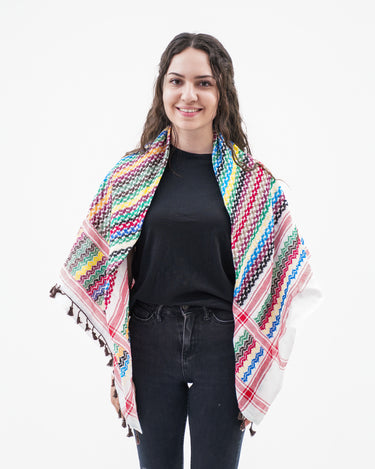
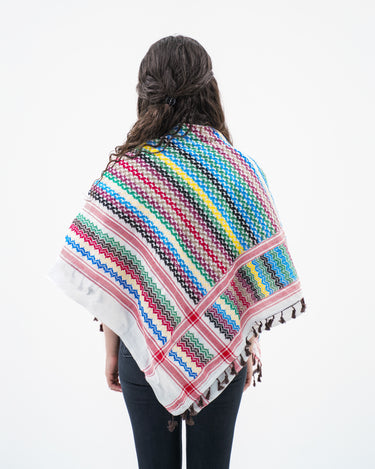
Regenbogen Hirbawi Keffiyeh – Hoffnung und Vielfalt
So wie ein Regenbogen nach einem Sturm erscheint, verkörpert die Regenbogen-Keffiyeh Frieden und Hoffnung auf eine bessere Zukunft in Palästina. Ihr farbenfrohes Muster repräsentiert die vielfältigen Individuen aus aller Welt, die sich unerschütterlich für eine gerechte Welt einsetzen – eine Erinnerung daran, dass der Kampf für Gerechtigkeit in Palästina Teil eines breiteren, universellen Kampfes für Frieden, Gleichheit und Befreiung ist.
→ Die Regenbogen-Keffiyeh kaufen.
Der Scheich Jarrah: Eine in der Heimat verwurzelte Gemeinschaft
 Hirbawi Sheikh Jarrah Keffiyeh, inspiriert von der Gemeinschaft ihres Namensgebers
Die grünen Fäden der Scheich Jarrah Keffiyeh repräsentieren die tiefen Wurzeln der palästinensischen Familien, die seit Generationen in diesem Jerusalemer Viertel leben – Häuser gebaut, Familien großgezogen und eine Gemeinschaft geschaffen haben, die die Zeit überdauert hat. Als die Familien von Scheich Jarrah internationale Aufmerksamkeit erlangten, weil sie sich den Vertreibungsbemühungen der israelischen Behörden widersetzten, wurde diese Keffiyeh zu einer Möglichkeit, ihre Geschichte nicht in Vergessenheit geraten zu lassen. Es ist ein Design über die Wurzeln einer bestimmten Gemeinschaft, nicht über eine breitere Bewegung.
→ Die Scheich Jarrah Keffiyeh kaufen.
Wie man eine Keffiyeh mit Absicht auswählt
Es gibt keine falsche Antwort, aber zu wissen, was jedes Design repräsentiert, kann Ihnen helfen, bewusst statt standardmäßig zu wählen. Hier ist eine grobe Anleitung:
-
Schwarz und Weiß — Klassische palästinensische Nationalidentität. Das universell bekannteste Keffiyeh-Design.
-
Rot und Weiß — Beduinisches Erbe und eine der beiden klassischen Keffiyeh-Farbgebungen.
-
Blau (Nazareth, Tabariya, Yafa, Traditionelles Blau) — Das Meer, der Himmel und alltägliche Eleganz, verbunden mit spezifischen palästinensischen Städten.
-
Grau / Dheisheh — Eine Hommage an palästinensische Flüchtlingslager und die Widerstandsfähigkeit der Menschen, die dort zu Hause sind.
-
Flaggenfarben (Palästina-Flagge, Hurriya-Freiheit, Palästina-Bestickt) — Eine direkte, unmissverständliche Aussage über die palästinensische Einheit und den Kampf für Freiheit.
-
Gaza — Eine Hommage an das Klima, die Küche und den widerstandsfähigen Geist Gazas – keine Flaggenreferenz.
-
Mar Saba — Für diejenigen, die sich von der palästinensischen Geschichte jenseits des aktuellen politischen Moments angezogen fühlen – alt, vielschichtig, kontemplativ.
-
Saoirse — Für diejenigen, die die irisch-palästinensische Solidaritätsverbindung persönlich spüren.
-
Regenbogen — Hoffnung und Vielfalt sowie ein Hinweis auf die universelle Natur des Kampfes für Gerechtigkeit.

Alle Farben, eine Fabrik
Unabhängig davon, welche Farbe oder welches Design Sie wählen, jede Keffiyeh in der Hirbawi-Kollektion wird auf denselben Webstühlen in derselben Fabrik in Hebron gewebt – der letzten Kufiya-Fabrik, die noch in Palästina in Betrieb ist. Die Farben ändern sich; der Ursprung nicht.
Beim Kauf bei Hirbawi kaufen Sie nicht nur einen Schal. Sie kaufen ein Stück palästinensische Materialkultur von den Menschen, die es noch herstellen, an dem Ort, wo es immer hergestellt wurde.
→ Alle Keffiyeh-Farben kaufen – gewebt in Palästina.
 Hirbawi-Fabrik, die letzte Kufiya-Fabrik in Palästina