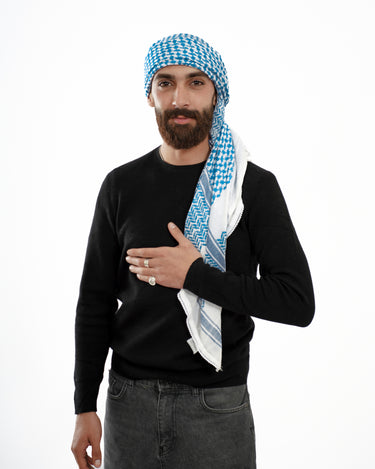
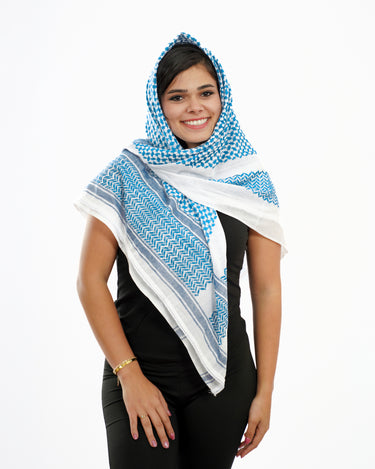
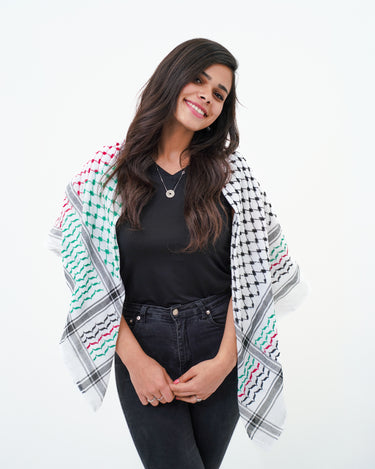
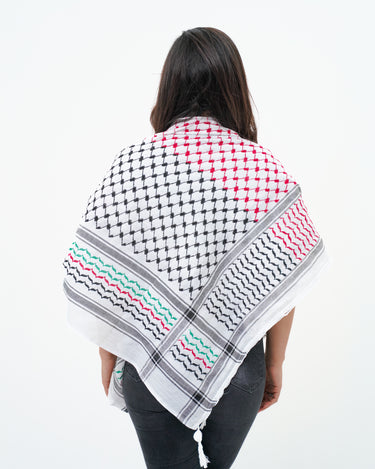
Sumud (صمود) lässt sich nicht sauber ins Deutsche übersetzen. Seine Bedeutung wird meist mit „Standhaftigkeit“ oder „Widerstandsfähigkeit“ angegeben, aber keines der beiden Worte trägt die volle Bedeutung dessen, was Palästinenser meinen, wenn sie es sagen. Sumud ist leiser als Widerstand und bewusster als Überleben. Es ist die Weigerung, zu verschwinden.
Was bedeutet Sumud auf Deutsch?
Die genauste Übersetzung von Sumud ins Deutsche ist „Standhaftigkeit“ – aber dieses Wort entbehrt der Tiefe des Originals. Sumud wird im Deutschen manchmal als Widerstandsfähigkeit, Beharrlichkeit oder Verwurzelung wiedergegeben. Nichts davon trifft es ganz.
Im Arabischen leitet sich صمود (Sumud) von der Wurzel ص م د (ṣ-m-d) ab, was fest sein, aushalten, beharren bedeutet. Es erscheint im Koran im Sinne von solide und unbeweglich sein. Im modernen Arabisch – und speziell im palästinensischen Arabisch – hat sich die Bedeutung von Sumud zu etwas Spezifischerem entwickelt: einer Philosophie des Bleibens. Dort bleiben, wo man ist. Das pflegen, was man hat. Die Weigerung, ausgelöscht zu werden.
Im palästinensischen Alltag sieht Sumud nicht nach Protest oder Konfrontation aus. Es sieht aus wie ein Bauer, der seinen Olivenhain unter Besatzung pflegt. Wie eine Familie, die in einem Haus bleibt, trotz allem Druck, zu gehen. Wie ein Handwerker, der weiterhin an einem Webstuhl webt, für den es kaum noch einen Markt gibt. Sumud ist Präsenz als Akt des Widerstands.
Der Philosoph Sari Nusseibeh hat Sumud als „eine standhafte Verbundenheit mit dem Land und dem Leben auf dem Land“ beschrieben. Der Schriftsteller Raja Shehadeh, der den Ausdruck „palästinensische Spaziergänge“ prägte, um das Wandern durch eine verschwindende Landschaft zu beschreiben, nennt es eine Art, dem Ort, den man bewohnt, vollkommen lebendig zu sein, auch wenn er einem entrissen wird.
Sumud-Bedeutung im Arabischen und Islam
Die arabische Wurzel von Sumud – ص م د (ṣ-m-d) – vermittelt ein Gefühl von Solidität und Dauerhaftigkeit. Dieselbe Wurzel erscheint in Sure Al-Ikhlas (112:2): اللَّهُ الصَّمَدُ – „Allah ist Al-Samad“, was der Ewige, der Absolute, derjenige, von dem alle abhängen, bedeutet. In der islamischen Tradition ist Al-Samad (الصمد) einer der 99 Namen Gottes und bedeutet Selbstgenügsamkeit und dauerhafte Beständigkeit.
Diese theologische Wurzel verleiht Sumud im Islam eine besondere Tiefe: Sumud zu praktizieren bedeutet, eine Eigenschaft zu verkörpern, die im islamischen Denken göttlich ist – verwurzelt, selbstversorgend und unerschütterlich zu sein. Für palästinensische Muslime ist diese Verbindung zwischen dem spirituellen Konzept und der politischen Realität des Bleibens auf dem Land nicht zufällig. Sie ist ein Grund, warum das Wort so viel Gewicht hat.
Gerade in Palästina war die Bedeutung von Sumud immer mit dem Land verbunden. Sumud zu sein bedeutet, einem Ort anzugehören – ihm verbunden zu sein, für ihn verantwortlich zu sein, ihn trotz jeglichen Drucks nicht verlassen zu wollen.
Woher Sumud kommt
Das Wort selbst ist alt, aber Sumud als politisches und kulturelles Konzept kristallisierte sich in den Jahren nach der Nakba von 1948 heraus – der Vertreibung von mehr als 700.000 Palästinensern aus ihren Häusern während der Gründung des Staates Israel. Für diejenigen, die in dem verbliebenen Israel und für diejenigen im Westjordanland und Gaza, die auf dem Land blieben, wurde der Akt des Bleibens zu einer eigenen Form der Aussage.
In den 1970er Jahren begannen palästinensische Intellektuelle und die Palästinensische Befreiungsorganisation, Sumud formeller zu verwenden – zuerst als sozialpolitisches Konzept (der Standhaftigkeitsfonds der PLO leistete finanzielle Unterstützung für Palästinenser unter Besatzung), dann als breitere kulturelle Identität. Sumud zu sein bedeutete, unbestreitbar palästinensisch zu sein.
Nach den Oslo-Abkommen von 1993 unterschieden einige palästinensische Denker zwischen einem „passiven“ Sumud – einfach ausharren – und einem „aktiven“ Sumud: Institutionen aufbauen, Kultur pflegen, unter Besatzung ein Wirtschaftsleben schaffen als Form des täglichen Widerstands. Diese Unterscheidung ist wichtig. Sumud ist keine Passivität. Es ist bewusste, wache Beharrlichkeit.
Wie sich Sumud in der palästinensischen Kultur zeigt
In Palästina ist die Bedeutung von Sumud in der materiellen Kultur verankert – in den Objekten, die Menschen herstellen, behalten und weitergeben. Drei Dinge tragen seine Bedeutung besonders:
 Ein alter palästinensischer Olivenbaum; Eine Misbaha aus Olivenholz, Gebetsketten, die die Heiligkeit des Olivenbaums und eine festliche Dimension der palästinensischen Kultur verbinden.
→ Authentische Olivenholz-Accessoires aus Palästina ansehen
Der Olivenbaum
Der Olivenbaum ist das dauerhafteste Symbol von Sumud. Palästinensische Olivenbäume leben Hunderte – manchmal Tausende – von Jahren. Familien haben über Generationen hinweg dieselben Haine gepflegt, wobei der Besitz eher durch mündliche Überlieferung und Erinnerung als durch Dokumente verfolgt wird. Die Zerstörung von Olivenbäumen wurde lange Zeit als Form der Kollektivstrafe unter Besatzung eingesetzt; die fortgesetzte Pflege derselben ist eine Bekräftigung der Zugehörigkeit. Wenn Palästinenser von Sumud sprechen, ist der Olivenbaum fast immer im Hintergrund.
Die Kufiya
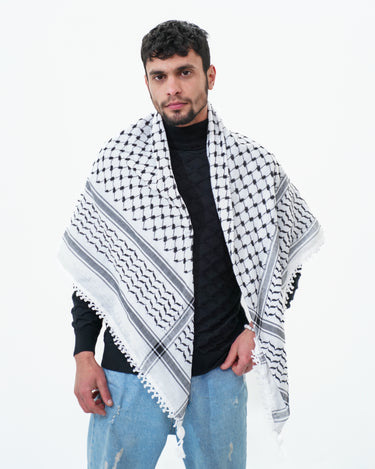
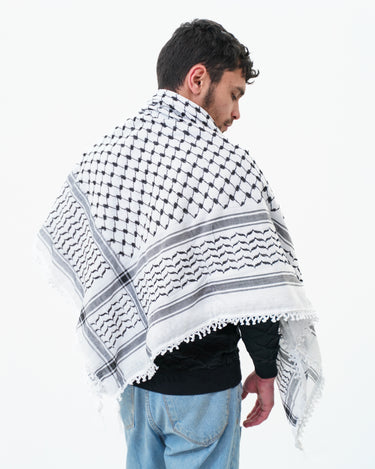
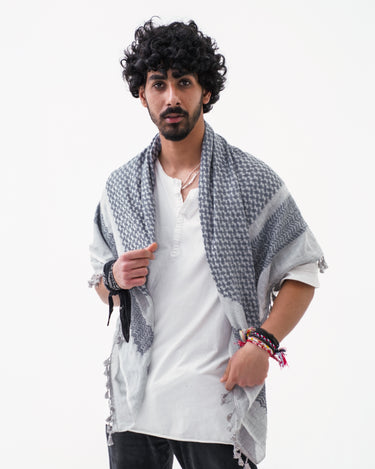
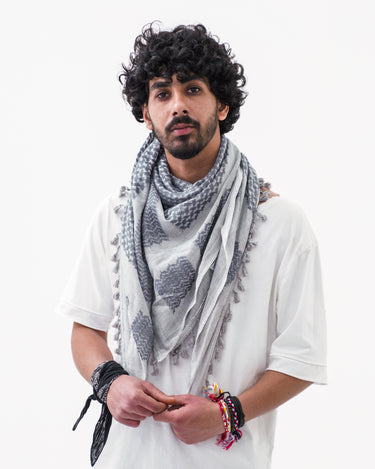
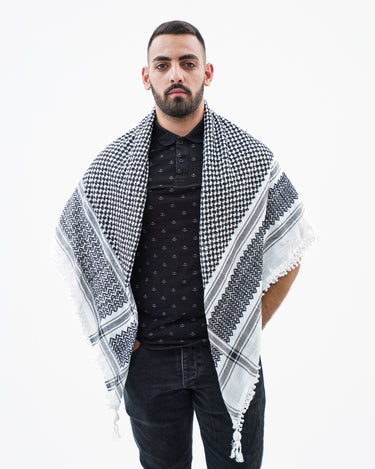
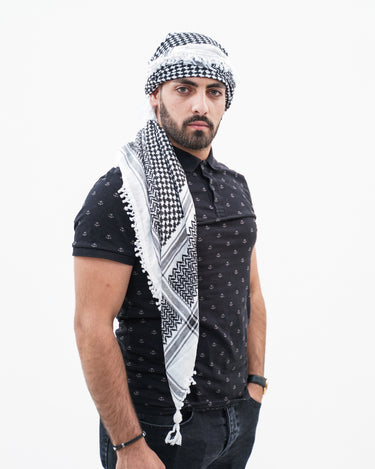
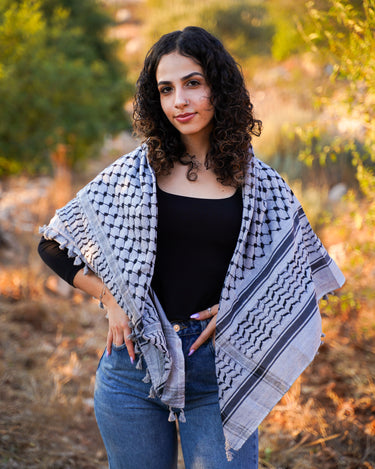
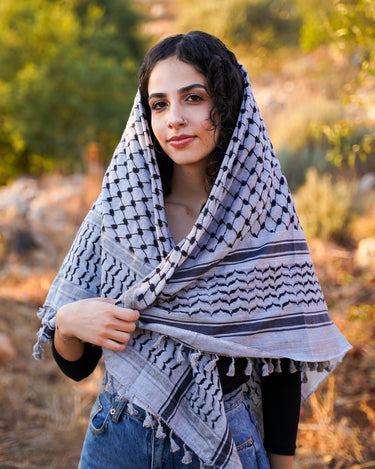
Die schwarz-weiße Kufiya – die palästinensische Keffiyeh – wurde von 1967 bis 1993 zur De-facto-Flagge Palästinas, als Israel die eigentliche palästinensische Flagge in Gaza und im Westjordanland verbot. Eine zu tragen, bedeutete, sich der Auslöschung zu verweigern. Heute bleibt die Kufiya ein Symbol der Solidarität und des kulturellen Stolzes, aber für Hirbawi – die letzte Fabrik in Palästina, die sie noch webt – ist sie auch ein lebendiger Ausdruck von Sumud. Die Fabrik ist seit 1961 in Betrieb. Sie überlebte die Globalisierung, die Oslo-Abkommen und den beinahe vollständigen Zusammenbruch der lokalen Textilindustrie. Sie ist immer noch da.
 Hirbawi Schwarz-Weiß-Kufiya in der traditionellen palästinensischen Farbgebung; Hirbawi-Fabrik – Webt Kufiyas in Al-Khalil, Palästina, seit 1961
→ Jede Kufiya von Hirbawi wird in Palästina gewebt – nicht im Ausland. Entdecken Sie die Kollektion.
Tatreez – Palästinensische Stickerei
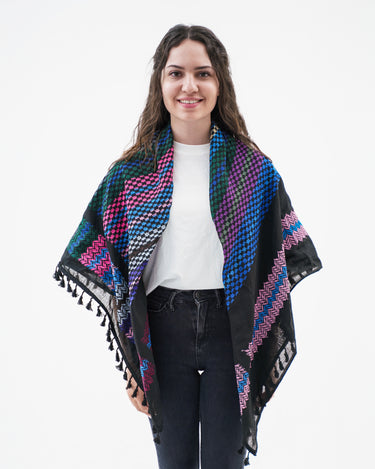
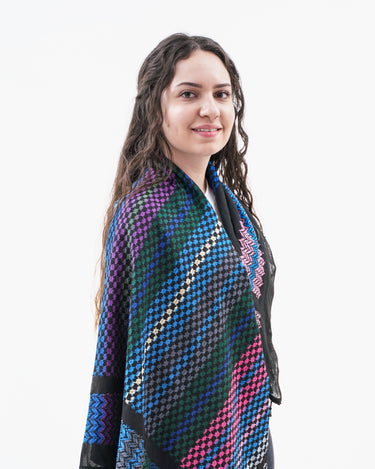
Tatreez (تطريز), die traditionelle Stickerei Palästinas, ist ein weiterer Träger von Sumud. Jedes Dorf hatte historisch eigene Muster, Farben und Stichkonventionen. Frauen stickten diese Muster in Kleider, Paneele und Haushaltsgegenstände – so hielten sie das visuelle Vokabular eines bestimmten Ortes auch nach der Vertreibung lebendig. Für palästinensische Frauen in Flüchtlingslagern und Diasporagemeinschaften war Tatreez eine Form der Erinnerungsarbeit: Stich für Stich die Landschaft wieder ins Leben sticken.
 Palästinensische Tatreez-Stickerei – Erinnerung in Stoff gestickt; Tatreez-inspirierte Tragetasche, hergestellt in Palästina
→ Entdecken Sie weitere mit Tatreez bestickte Produkte aus Palästina
Sumud-Geschichten: Warum wir unsere Handwerkerlinie so genannt haben
Als wir Sumud Stories ins Leben riefen – eine Kollektion handgefertigter palästinensischer Waren von palästinensischen Kunsthandwerkern – war der Name eine bewusste Entscheidung. Nicht „Handwerkerkollektion“. Nicht „Made in Palestine“. Sondern Sumud Stories.
Jedes Stück der Kollektion wird von einem Kunsthandwerker gefertigt, der immer noch hier ist: ein Juwelier, der mit lokal bezogenem Messing und Silber arbeitet, Stickerinnen, die Tatreez-Muster aus bestimmten Dörfern am Leben erhalten, Weber, deren Handwerk mit einem Land verbunden ist, das sie nicht verlassen haben. Die Kollektion ist keine Nostalgie. Sie ist ein Beweis der Präsenz.
 Sumud Stories – handgefertigter palästinensischer Schmuck und Accessoires
Der Kauf eines Stücks von Sumud Stories ist eine Transaktion mit einer bestimmten Person an einem bestimmten Ort. So sieht Sumud im Handel aus: Wirtschaftsleben als eine Form des Bleibens.
→ Entdecken Sie Sumud Stories – handgefertigte palästinensische Waren, Schmuck und Accessoires, hergestellt in Palästina.
Sumud jenseits von Palästina
In den letzten Jahren hat sich das Wort Sumud über seinen palästinensischen Kontext hinaus verbreitet. Wissenschaftler der Postkolonialstudien, der Befreiungstheologie und sozialer Bewegungen haben es übernommen, um eine Form des Widerstands zu beschreiben, die durch Präsenz und Beharrlichkeit statt durch Konfrontation wirkt. Indigene Landverteidiger auf der ganzen Welt haben in Sumud etwas Vertrautes erkannt: die Weigerung, das Verschwinden zu akzeptieren.
Diese globale Resonanz ist teilweise der Grund, warum das Wort relativ unversehrt in den englischsprachigen Diskurs Eingang gefunden hat – seine Bedeutung bleibt im arabischen Original besser erhalten als übersetzt. Wenn man das Wort vollständig versteht, wirken die englischen Ersatzbegriffe dünn.
Warum Sumud jetzt wichtig ist
Seit Oktober 2023 steht der palästinensische Sumud auf eine Weise im globalen Rampenlicht, wie er es seit Jahrzehnten nicht mehr war. Die Bilder aus Gaza und dem Westjordanland – von Menschen, die in zerstörte Häuser zurückkehren, um auf den Trümmern zu kochen, von Journalisten, die mit Staub im Gesicht senden, von Kindern, die Karten von Dörfern zeichnen, die nicht mehr existieren – sind alle Ausdruck desselben Konzepts. Sumud ist keine Hoffnung im optimistischen Sinne. Es ist etwas Härteres und Ehrlichereres: die Entscheidung, präsent zu bleiben, weiter zu schaffen, weiter zu sein.
Für diejenigen von uns außerhalb Palästinas ist die Auseinandersetzung mit Sumud teilweise ein Akt des Zeugnisses. Das Wort zu verstehen bedeutet, etwas Wesentliches darüber zu verstehen, warum die palästinensische Kultur – ihre Handwerke, ihr Essen, ihre Musik, ihre Geschichten – nicht nur über 75 Jahre Vertreibung und Besatzung überlebt, sondern auch an Bedeutung gewonnen hat.
Die Kufiya als Form von Sumud
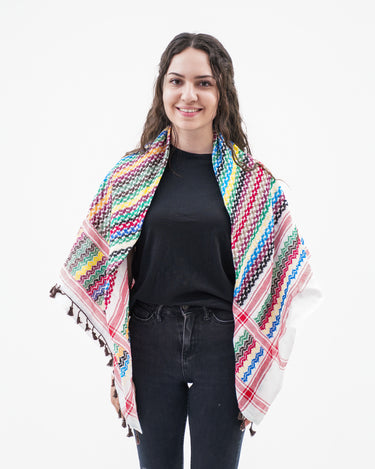
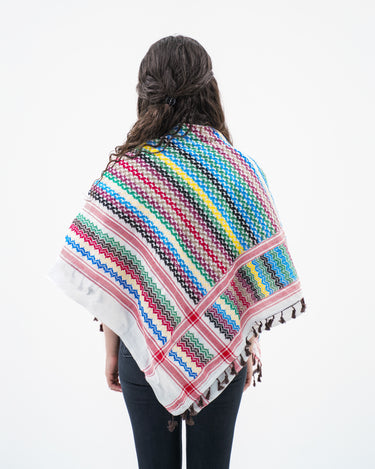
 Eine Hirbawi Kufiya tragen – hergestellt von Menschen, die sich entschieden haben, zu bleiben
Die Hirbawi-Fabrik webt seit 1961 Kufiyas in Hebron. Sie ist die letzte palästinensische Kufiya-Fabrik, die noch existiert. Jeder Schal, der sie verlässt, wird von Arbeitern hergestellt, die immer noch dort sind, an Maschinen, die immer noch laufen, in einer Stadt, die immer noch produziert. Das ist Sumud – nicht als Slogan, sondern als Webstuhl, der sich immer noch dreht.
Wenn Sie eine Hirbawi Kufiya tragen, tragen Sie etwas, das von Menschen hergestellt wurde, die sich entschieden haben zu bleiben und weiter zu produzieren. Das ist eine Geschichte, die es wert ist, erzählt zu werden.
→ Kaufen Sie authentische palästinensische Kufiyas – hergestellt in der letzten Fabrik in Palästina.