Can Anyone Wear a Keffiyeh? Solidarity, Respect & Cultural Meaning
Can anyone wear a keffiyeh? Yes. Its history and meaning help explain why it stands apart among cultural garments. This post explores the keffiyeh as a symbol of international solidarity, examines cultural appreciation versus appropriation, and explains why purchasing an authentic keffiyeh from Palestine is the most respectful choice available.
The Hesitation Is Real — and Reasonable
In recent years, as the keffiyeh has become more visible globally — on protest marches, at music festivals, in fashion editorials — a genuine question has followed it: is it OK for non-Arab, non-Palestinian people to wear one?
This question is asked in good faith by people who care about cultural respect. It deserves a thoughtful answer, not a dismissive one. So here it is, in full.
What Is Cultural Appropriation — and Does It Apply Here?
Cultural appropriation is, at its most straightforward, when members of a dominant culture adopt elements of a marginalized culture in ways that strip those elements of their meaning, profit from them without acknowledgment, or reduce them to costume. Think of headdresses worn at music festivals, bindis sold as party accessories, or cornrows rebranded as an "edgy trend."
The test is roughly this: are you taking from a culture that is being harmed, without acknowledging that harm, in a way that benefits you while ignoring them?
The keffiyeh does not fit this pattern — and here is why.
The Keffiyeh Was Always a Symbol of International Solidarity
Unlike a ceremonial headdress or a garment tied to a specific rite of passage, the keffiyeh — especially the black-and-white Palestinian kuffiyeh — was deliberately and explicitly adopted as an international symbol of resistance by Palestinian political movements from the 1960s onward. Yasser Arafat wore it in front of the United Nations in 1974. It appeared on solidarity posters alongside anti-apartheid, Irish republican, and Latin American liberation imagery. It was worn by Nelson Mandela. It was sold in European student unions in the 1980s.
The Palestinian people did not keep the keffiyeh to themselves — they shared it with the world as an invitation to stand with them. Non-Palestinian people wearing it in solidarity is not appropriation: it is the response Palestinians asked for.
Context and Intention Still Matter
The fact that the keffiyeh is a symbol of solidarity does not mean it can be worn thoughtlessly. Intention and context shape what the gesture communicates.
Wearing a keffiyeh as a fashion accessory without any awareness of what it means is different from wearing one because you understand its history and want to express solidarity. Neither is technically wrong, but the second is more honest and more respectful.
What matters is not your ethnicity or your background — it is whether you are engaging with the object's meaning or erasing it. You do not need to be Palestinian to wear a keffiyeh with integrity. You do need to know what you are wearing.
Here is where the economics of the gesture matter as much as the gesture itself.
Most keffiyehs sold in Western markets today are manufactured in China. They are inexpensive, they look like the real thing, and they carry none of the economic benefit back to Palestine. When someone wears one of those and calls it solidarity, the Palestinians whose culture they are expressing see nothing from it.
Hirbawi is the last kufiya factory still operating in Palestine. It has been weaving kufiyas in Hebron since 1961, run by the same family for over sixty years. During the height of Chinese import competition in the early 2000s, the factory nearly closed. It survived because people started buying authentic — specifically because solidarity buyers sought out the real thing.
If you are going to wear a keffiyeh, buy it from the people who make it. That is not just the ethical choice — it is the one that actually connects your gesture to the people it is meant to support.
It is worth being direct about this: Palestinian voices on the question of non-Palestinians wearing the keffiyeh are overwhelmingly welcoming, not cautionary. Palestinian activists, artists, and commentators have consistently encouraged non-Palestinians to wear the keffiyeh as an act of solidarity — while asking that they do so with awareness rather than ignorance, and that they buy authentic rather than cheap imitations.
The Palestinian Campaign for the Academic and Cultural Boycott of Israel (PACBI) and numerous Palestinian-led solidarity organizations have explicitly framed the keffiyeh as a symbol open to all people who stand with Palestine. The invitation is real.
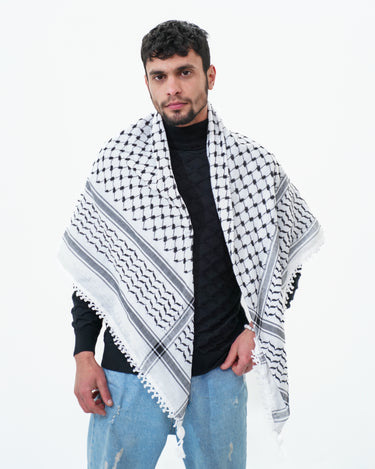
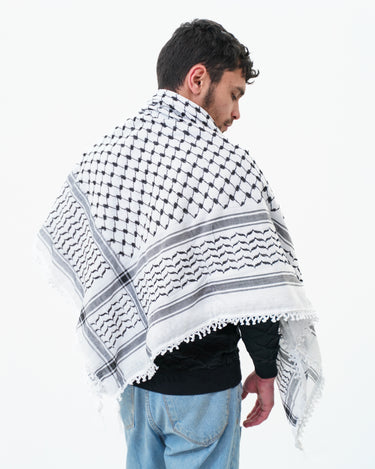
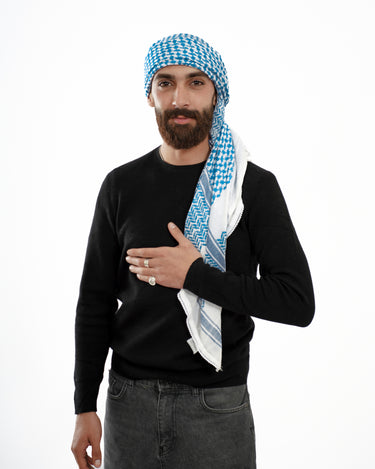
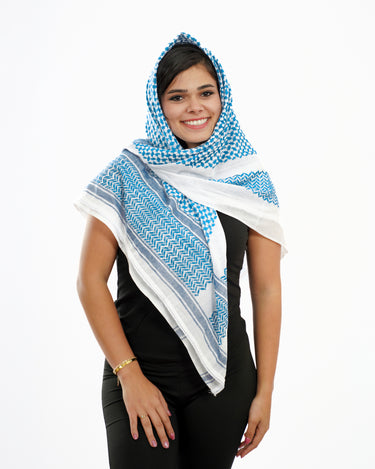
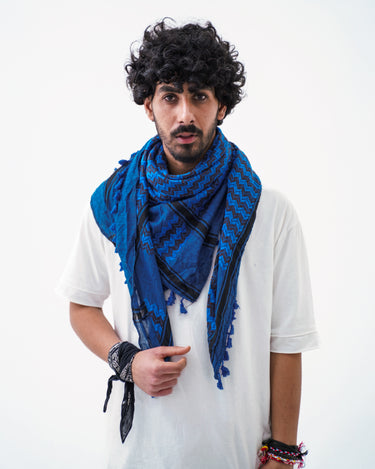
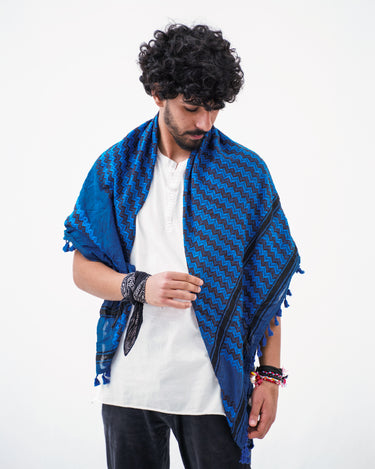
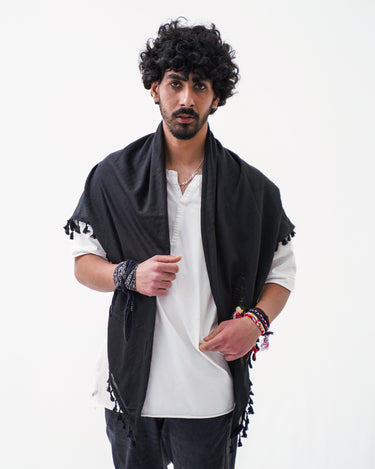
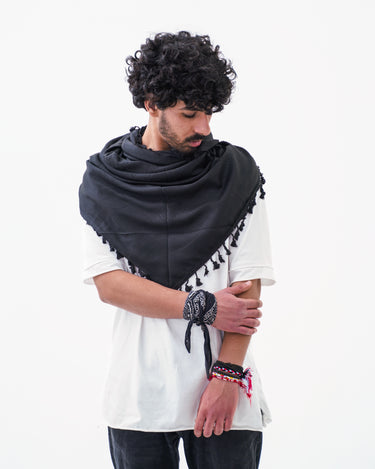
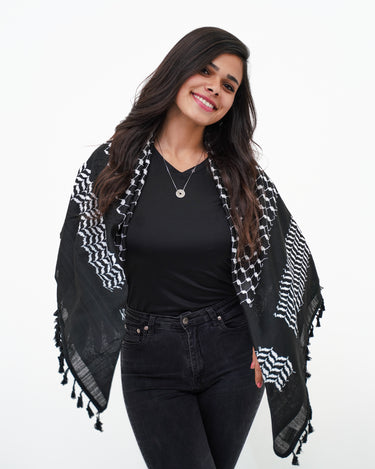
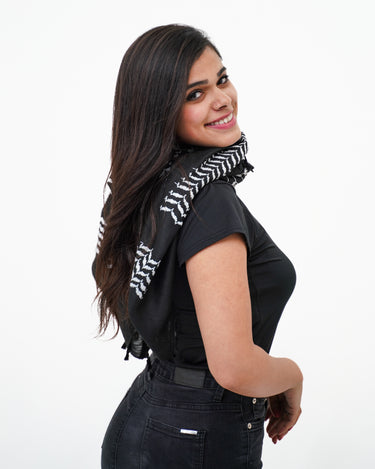
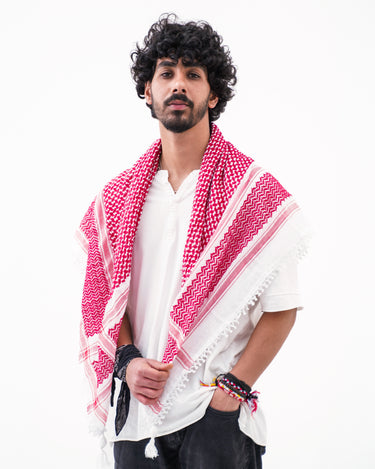
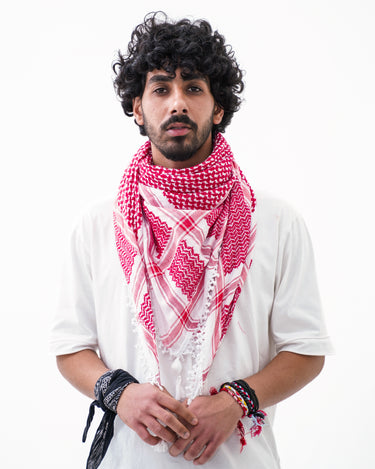
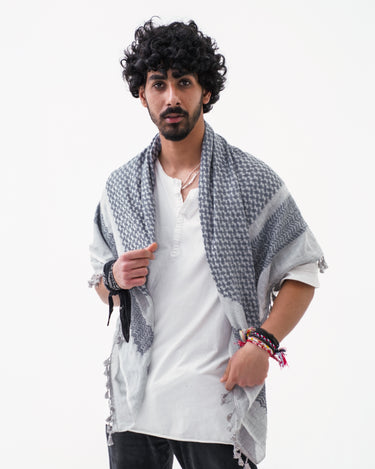
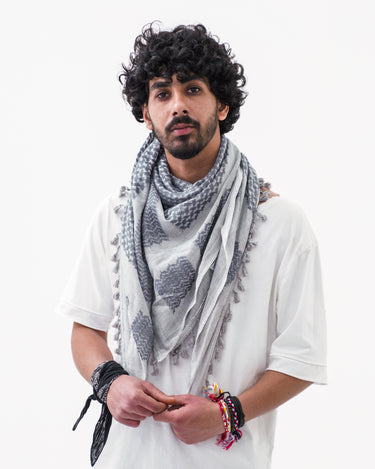
Keffiyehs are worn worldwide in solidarity with Palestine - the symbol belongs to anyone who stands for equal human rights
What the Keffiyeh Is Not
A few things worth naming clearly:
The keffiyeh is not a religious garment. It is cultural and political, not sacred. There are no religious restrictions on who can or cannot wear one.
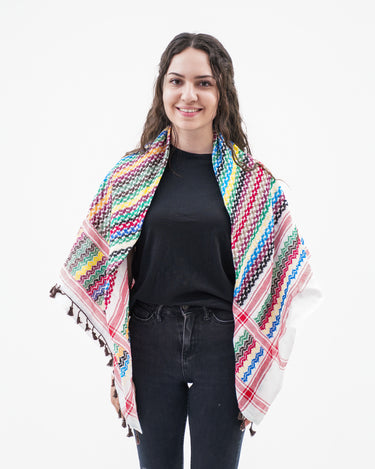
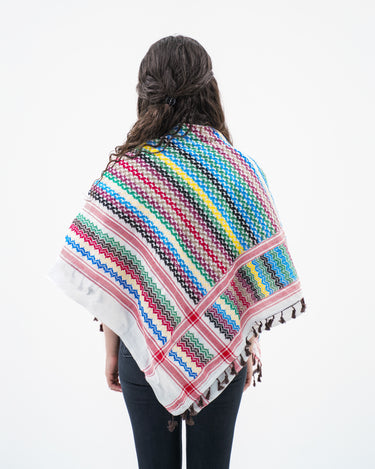
The keffiyeh is not exclusive to Palestinians. It is worn across the Arab world in different colors and styles — by Jordanians, Iraqis, Gulf Arabs, and others — and has been for centuries.
The keffiyeh is not a costume. Wearing it as fancy dress, as a prop for a "Middle Eastern aesthetic," or as a quirky accessory without any awareness of its meaning is where the gesture tips into disrespect — not because of who you are, but because of how you are treating something that carries real meaning for real people.
Wearing It Well: A Practical Note
If you are new to wearing a keffiyeh and want to do it thoughtfully, here is what that looks like in practice:
Buy authentic. The difference between a Hirbawi keffiyeh and a Chinese import is not just quality — it is whether your purchase reaches Palestine.
If someone asks what you are wearing, be able to answer. "It is a Palestinian keffiyeh" is a complete sentence. So is "I bought it from the last factory still weaving them in Palestine."
You do not need to over-explain or over-perform. Wearing it is enough.
Does buying an authentic one from Palestine matter? Very much.
The keffiyeh is not a closed symbol. It is an open one — a piece of textile that Palestinians have shared with the world as an invitation to solidarity. The most respectful way to accept that invitation is to wear it with awareness, and to make sure that when you do, the people who made it benefit from your choice.




 When wearing a keffiyeh - what matters is not your ethnicity, but
  Keffiyehs are worn worldwide in solidarity with Palestine - the symbol belongs to anyone who stands for equal human rights