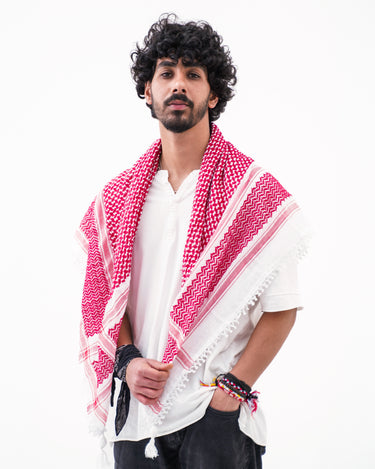
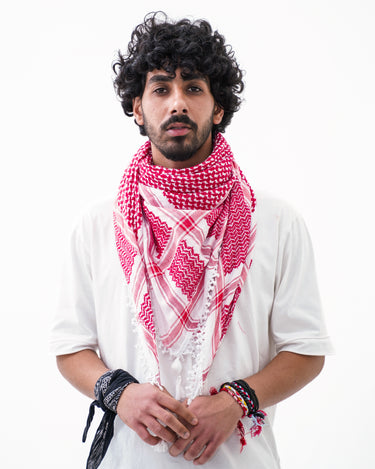
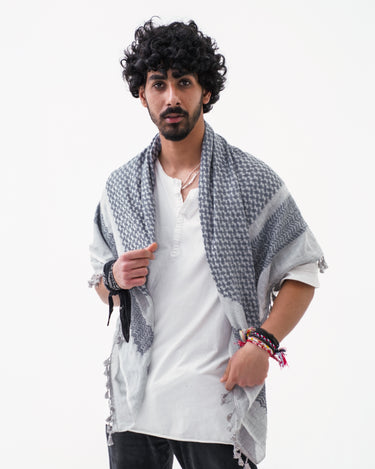
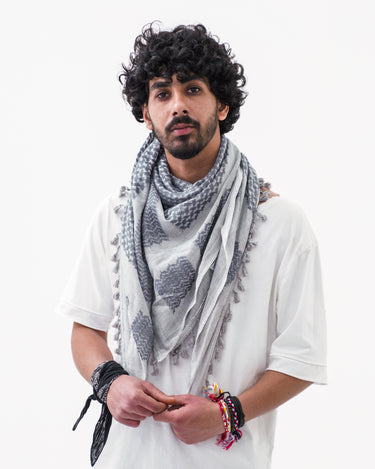
The Keffiyeh Was Always Palestinian
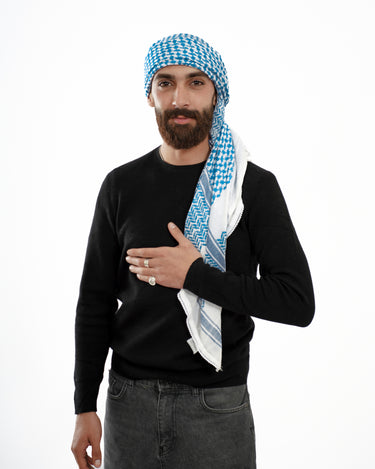
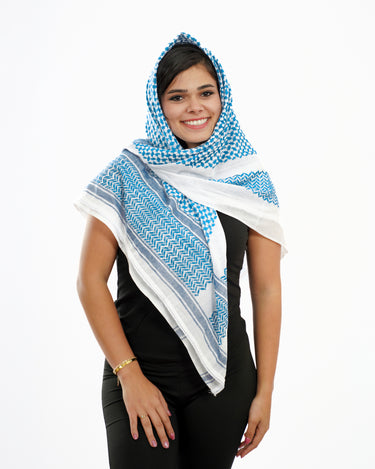
The kuffiyeh has been part of Palestinian life for centuries. Long before it became a global symbol of solidarity, it was a working garment: worn by Palestinian farmers and shepherds to protect against sun and dust, tied in ways that differed by region and tribe, and woven locally using cotton grown nearby.
Palestinian textile production was once a thriving industry centered in the West Bank, particularly in Hebron and Nablus. Families ran looms out of workshops and homes, producing the checked cotton cloth that would become one of the most recognizable fabrics on earth. The craft was passed down within families over generations, embedded in the local economy the same way olive farming was: quietly, stubbornly, as a form of staying.
What Happened to Palestinian Textile Production
The story of Palestinian textile production is, in large part, the story of Palestinian economic life under occupation: interrupted, constrained, and repeatedly put under pressure by circumstances outside the community's control.
After 1967 and the Israeli occupation of the West Bank and Gaza, Palestinian manufacturers faced increasing restrictions on movement, access to materials, and access to markets. By the 1990s, the opening of global trade routes and the flood of cheap Chinese imports hit Palestinian textile manufacturers the same way they hit traditional weavers everywhere — but harder, because Palestinian producers were already operating with one hand tied behind their backs.
By the early 2000s, one factory after another closed. At the peak of the Palestinian keffiyeh industry, there had been dozens of producers in Hebron alone. By 2008, only one was left.
Hirbawi: The Last Factory in Palestine
 Hirbawi Textile Factory - established 1961, Hebron, West bank
Yasser Hirbawi opened his textile factory in Hebron in 1961. He had learned the craft as a young man, acquired a set of industrial looms, and set up production in the city where Palestinian weaving had deep roots. For decades, the factory ran steadily, producing kufiyas for the local and export market.
When Chinese imports began undercutting Palestinian manufacturers in the 1990s and 2000s, Hirbawi faced the same pressure as everyone else — but refused to close. His son and then his grandchildren kept the factory running. At its lowest point, orders had nearly dried up entirely. The looms were still. The craft was almost lost.
What saved Hirbawi was a combination of things: international solidarity buyers who specifically sought out Palestinian-made keffiyehs, journalists who told the factory's story, and a growing awareness that the "authentic keffiyeh" most people thought they were buying was not, in fact, from Palestine at all.
Today, Hirbawi is the only kufiya manufacturer still operating in Palestine. The factory employs Palestinian workers in Hebron. Every keffiyeh it produces is woven on the original looms, using the original patterns, in the original place.
→ Shop Hirbawi — the last kuffiyeh factory in Palestine.
How to know if your Keffiyeh is authentic

Most people buying a keffiyeh online have no idea whether they are getting an authentic Palestinian-made piece or a Chinese import. Here is what to look for.
1. Check the Label
This is the most direct check. An authentic Hirbawi keffiyeh will be clearly labeled:
HIRBAWI® Original
![]() صنع في فلسطين
صنع في فلسطين![]()
![]()
HIRBAWI.PS
Made in Palestine
If the label says "Made in China," "Made in Bangladesh," or gives no country of origin at all, it is not from Palestine.
If it does however specify that it is made in Palestine, ensure that it is made from an authentic Palestinian producer.
Hirbawi includes a sewn label on every piece. If a seller cannot confirm where their keffiyehs are manufactured, that is your answer.
2. Feel the Weight
Authentic Hirbawi kufiyas are woven from nearly 100% cotton on industrial looms that produce a specific weight and density. The fabric has body to it — it drapes without flopping, holds a fold, and feels substantial in your hands. Many Chinese imports use thinner cotton blends or synthetic fibers that feel lighter and less structured.
3. Look at the Fringe
The fringe on an authentic Hirbawi keffiyeh is hand-knotted: each tassel is tied individually, which creates a consistent, tight knot at the base. Machine-finished fringe on cheaper imports tends to be looser, more uneven, and more likely to fray quickly with wear.
4. Examine the Pattern
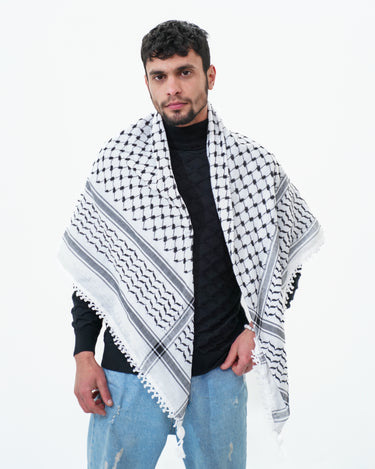
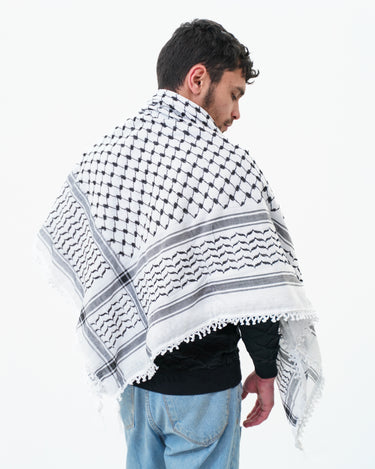
The classic Hirbawi check — the dense fishnet lattice in the center, bordered by thick parallel stripes — is precise. The lines are clean, the intersections are square, and the overall pattern is crisp because it is woven on calibrated industrial looms. Lower-quality imports often show slightly blurry pattern edges or inconsistent spacing in the check.
5. Buy from a Verified Source
The simplest way to guarantee authenticity is to buy directly from a retailer that sources exclusively from Hirbawi. Kufiya.org is one of them. Every keffiyeh sold here comes directly from the Hirbawi factory in Hebron.
 Hirbawi keffiyeh hand-knotted fringe and authentic label
Why Authenticity Matters Beyond Aesthetics
This is not a conversation about quality for quality's sake. It is about where the money goes.
When you buy a twelve-dollar keffiyeh made in China, the twelve dollars goes to a manufacturer in China. No part of it reaches Palestine. The Palestinian artisans whose culture the keffiyeh represents see nothing from that transaction.
When you buy an authentic Hirbawi keffiyeh, the money goes to a Palestinian family business in Hebron. It employs Palestinian workers. It keeps a craft alive that has been practiced on that land for generations. It is the material difference between wearing solidarity and enacting it.
The Hirbawi factory survived the worst years of Chinese competition because enough people made the choice to buy authentic. That choice, repeated across thousands of buyers, is what kept the looms running. Every purchase is part of that same story.
 Palestenian weaver at Hirbawi factory, making kufiyas in Palestine since 1961
A Note on the Sumud Stories Collection
The Hirbawi keffiyeh is the most visible Palestinian craft still in production — but it is not the only one. Palestinian artisans across the West Bank are producing jewelry, embroidery, ceramics, and accessories that carry the same weight of place and persistence.
The Sumud Stories collection gathers these pieces together: handcrafted Palestinian goods made by Palestinian makers who are still here, still working, still creating in the face of every pressure to stop. Each piece is a form of economic sumud — staying in place by keeping the craft alive.
→ Explore Sumud Stories — handcrafted Palestinian goods made in Palestine.

The Short Version
Most keffiyehs sold online are not from Palestine. Telling them apart requires checking the label, assessing the weight and weave quality, and buying from a source that can confirm the origin.
Hirbawi is the last kufiya factory still operating in Palestine. Buying from Hirbawi is the only way to guarantee that your keffiyeh was made by Palestinians, in Palestine — and that your purchase reaches the people whose craft you are wearing.
→ Shop authentic keffiyehs from Hirbawi. Made in Palestine.
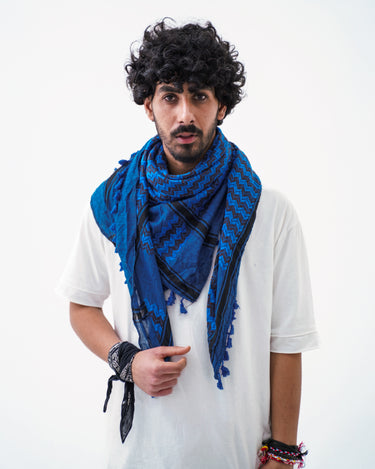
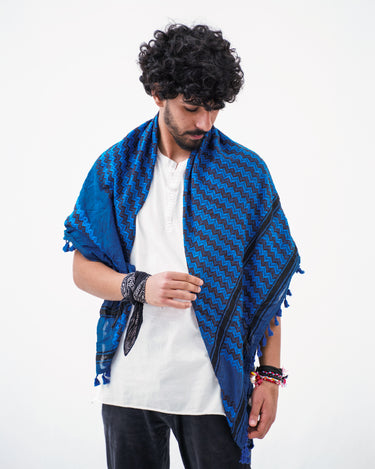
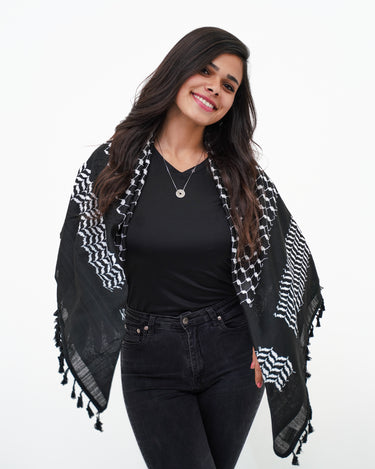
 Authentic Palestinian keffiyeh from Hirbawi, the last remaining factory in Palestine