Most lists of "brands that support Palestine" focus on boycotts: what not to buy, which companies have taken which positions. This is a different kind of list — not what to avoid, but what to actively choose. These are Palestinian brands, making Palestinian goods, in Palestine.
Buying from Palestinian brands is the most direct economic act of solidarity available to most people. Not a donation that passes through an organisation. Not a symbolic gesture. A purchase from a specific craftsperson or factory in a specific city in Palestine, made in exchange for something real that will arrive at your door and last for years.
This guide covers the Palestinian-owned businesses and Palestinian brands operating today — what they make, where they operate, and why they matter.
What Is a Palestinian Brand?
For the purposes of this guide: a Palestinian brand is a business that is Palestinian-owned and produces Palestinian products made in Palestine by Palestinian workers. This distinguishes them from solidarity brands (non-Palestinian companies donating a percentage of sales to Palestinian causes) and from diaspora brands operating outside Palestine.
Both solidarity brands and diaspora brands have their place. But Palestinian-owned businesses operating in Palestine are a distinct category — the supply chain itself is Palestinian, from the hands that make to the owners who sell. That directness matters.
When people search for how to support Palestinian businesses, what they usually mean is: how do I put money directly into Palestinian hands? The answer is to support Palestinian businesses that are actually making things in Palestine — not buying from retailers who donate a fraction to causes, but buying Palestinian-made goods directly.


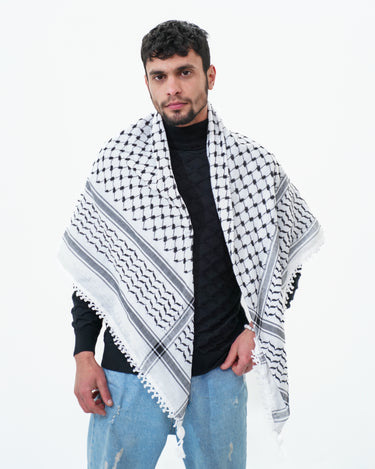
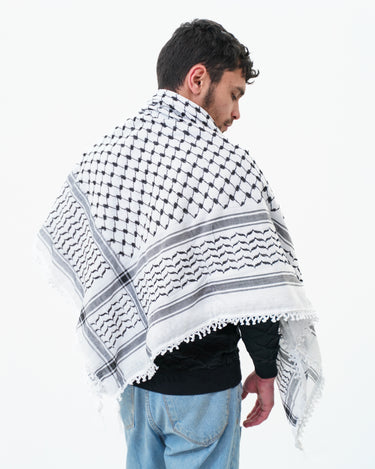
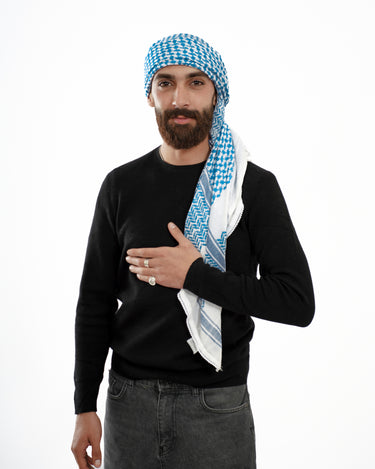
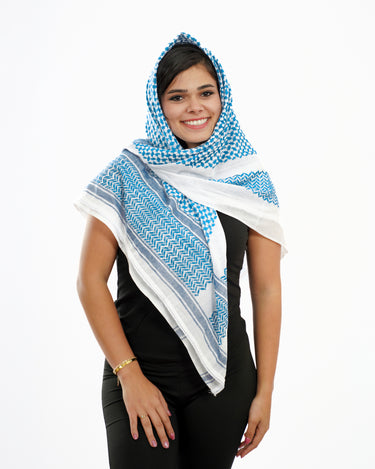
Hirbawi kufiya factory - the last Palestinian kufiya manufacturer in Palestine since 1961
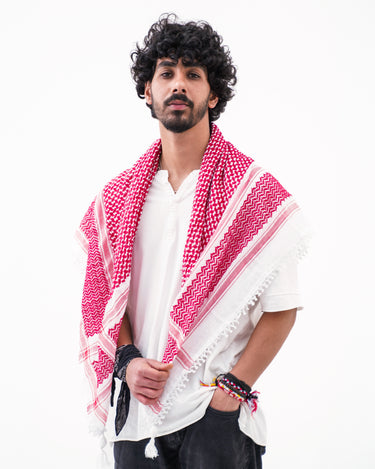
Hirbawi® — The Last Kufiya Factory in Palestine
Where: Hebron (الخليل), West Bank, Palestine
What they make: Kufiyas — the Palestinian keffiyeh, woven on industrial looms
In operation since: 1961
Hirbawi is, by almost any measure, the most important Palestinian brand still operating. Not because of its age or its name recognition — though both are significant — but because it has survived something almost no other Palestinian textile manufacturer has: the complete collapse of the domestic kufiya industry.
In the 1990s, cheap Chinese imports flooded the market. Palestinian kufiya factories closed one by one until only Hirbawi remained. It is the last. That is not metaphor; it is simply true. Every kufiya labelled "made in Palestine" that isn't from Hirbawi is not made in Palestine.
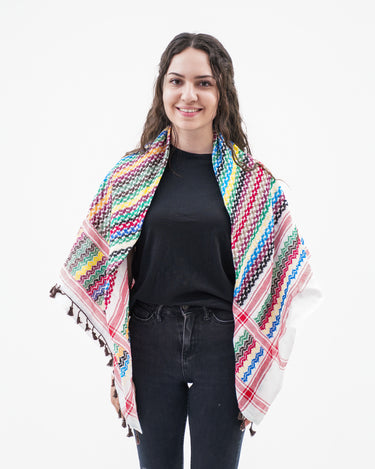
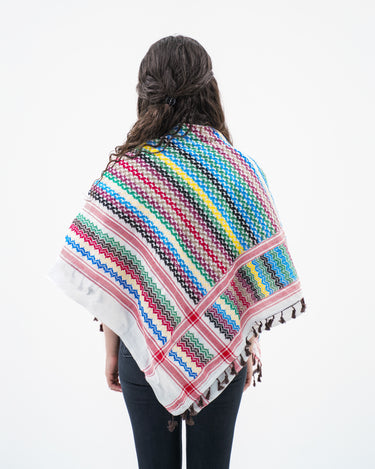
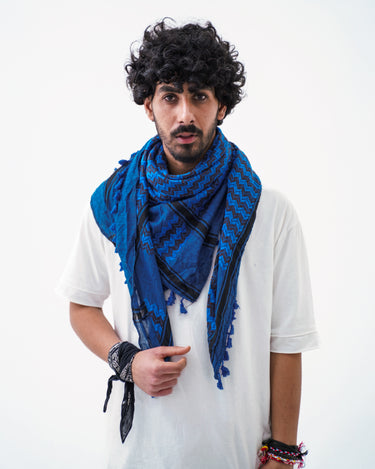
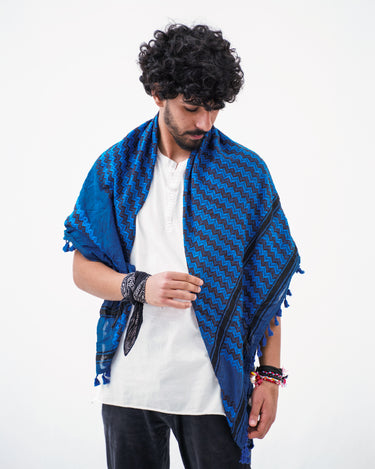
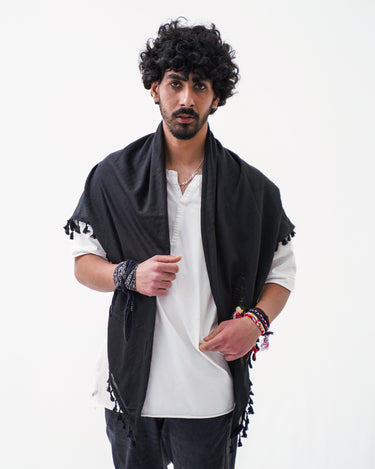
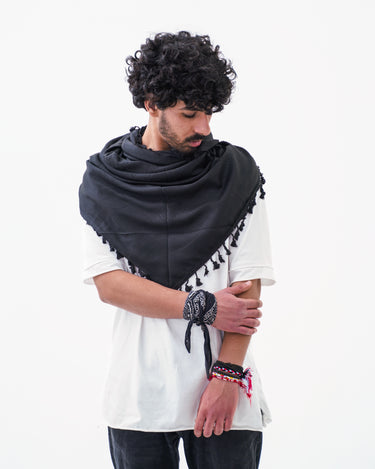
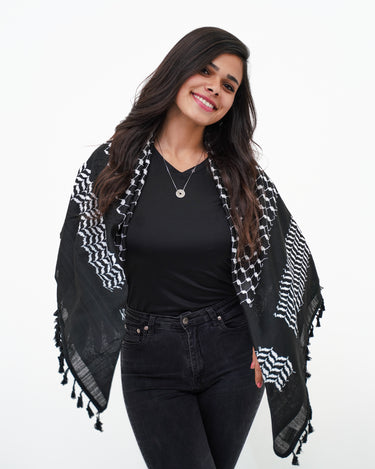
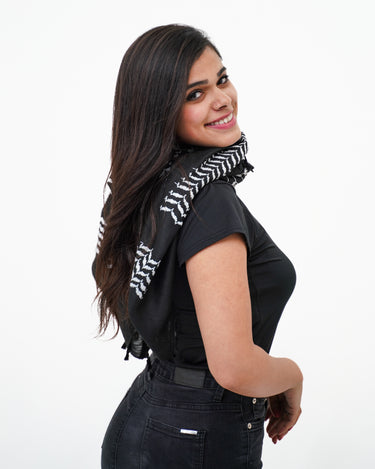
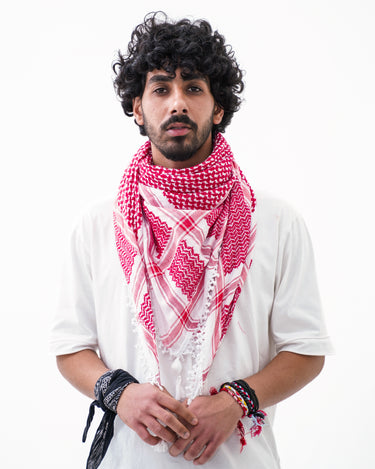
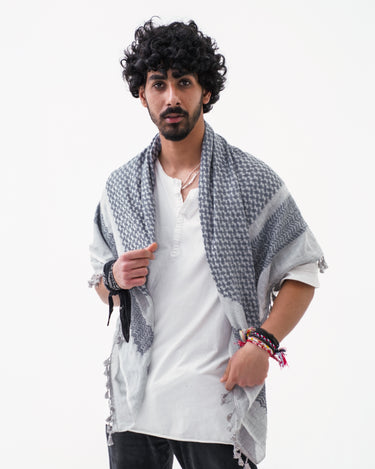
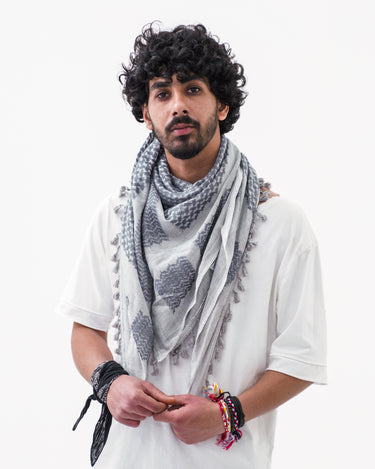
Hirbawi produces the classic Black & White Kufiya and the Red & White — but also more than fifty colourways, each named after Palestinian cities, villages, and landscapes: the Yafa, the Nazareth, the Jenin, the Nablus, the Ramallah, the Bethlehem. To wear one is to carry the name of a place.
→ Shop Hirbawi® Kufiyas — woven in Hebron since 1961.

Sumud Stories™ Fair Trade - Palestinian goods, leather wallets, copper jewellery, and accessories made locally by Palestinian artisans
Sumud Stories™ — Palestinian Artisan Goods
Where: West Bank, Palestine (workshops in Hebron, Jerusalem, and surrounding areas)
What they make: Leather goods, ceramics, jewellery, flags, music instruments, calendars, and more accessories
The name: Sumud (صمود) — the Palestinian concept of rooted steadfastness
Sumud Stories is a curated artisan line — a collection of Palestinian made products from craftspeople across the West Bank who are still operating, still producing, still present. The name is deliberate: each item tells a story of a Palestinian heritage that persists despite the suffocating occupation it endures.
The range is wider than it first appears. There are leather wallets and organisers worked in Hebron's leather tradition, ceramics painted with the rooftops of Jerusalem, copper jewellery shaped like the land and the birds that live above it, hand-carved olive wood prayer beads, a Palestinian frame drum, artisan soap, and two calendars documenting the birds and wildflowers of a landscape that persists.
What distinguishes Sumud Stories from many other Palestinian brands is specificity: each piece is named, its cultural reference explained, its maker's tradition documented. You are not buying an anonymous "Palestinian craft item." You are buying the Kanafani Keychain (named for Ghassan Kanafani, the Palestinian writer), or the Hisham Mosaic Necklace (drawn from the mosaics of Hisham's Palace in Jericho), or the Turteka hand drum (a traditional Palestinian frame drum). Every piece tells a deep-rooted and fascinating story of Palestine.
→ Browse Sumud Stories™ — Palestinian artisan goods made in Palestine.

PalStitch™ Palestinian embroidered tote bag - tatreez needlwork on everyday bags and accessories
PalStitch™ — Palestinian Tatreez Embroidery
Where: Hebron, Palestine
What they make: Tatreez-embroidered tote bags, pouches, hoodies, and apparel
The craft: Tatreez (تطريز) — traditional Palestinian embroidery
Palestinian embroidery — tatreez (تطريز) — is one of the most significant craft traditions in Palestine and one of the most internationally recognised expressions of Palestinian culture. Recognised by UNESCO as intangible cultural heritage, tatreez was historically the visual language of Palestinian village life: each region had its own patterns, stitch types, and colour sequences that marked where the embroiderer was from. Traditional Palestinian embroidery patterns were embroidered onto dresses, panels, and household objects — functioning as a record of place.
After the Nakba of 1948, tatreez became an act of cultural memory. Palestinian women in refugee camps and diaspora communities continued embroidering the patterns of villages they could no longer return to. The craft passed from mother to daughter across generations, and today UNESCO Palestinian embroidery recognition reflects what Palestinians have always known: this is not a decorative art — it is a living archive.
PalStitch brings the Palestinian embroidery tradition into contemporary everyday objects. Their tote bags are embroidered with patterns specific to Palestinian cities — Gaza, Al-Khalil (Hebron), Jeba — making the origin of the craft legible on the object. These are not generic "Palestinian pattern" bags. They are bags embroidered with the needlework traditions of a specific place.
→ Shop all PalStitch™ Palestinian embroidery →

PalStitch™ Palestinian embroidered fallahi hoodie - tatreez needlwork inspired clothing
Palestinian Clothing Brands — What Exists and Why It Matters
Beyond tatreez, there is a growing space of palestinian clothing brands and pro Palestinian clothing brands operating in and for the Palestinian market. PalStitch is the most accessible example of a Palestinian owned clothing brand producing internationally available goods — but the broader category of palestinian clothing brand work includes fashion designers in Ramallah, Bethlehem, and the diaspora who are bringing Palestinian aesthetics into contemporary garment making.
What unites these palestinian clothing brands is an insistence on specificity: not "Palestinian-inspired" but Palestinian-made or Palestinian-designed, using craft vocabularies that originate in the land. That distinction separates them from the far larger category of solidarity fashion that uses Palestinian symbols commercially.

Olive Wood Oasis™ Palestinian olive wood prayer beads, made from trimmings of age old Palestinian olive trees.
Olive Wood Oasis™ — Palestinian Olive Wood Craft
Where: Palestine
What they make: Hand-carved olive wood prayer beads
The material: Palestinian olive wood — from trees that may be centuries old
Palestinian olive trees are among the oldest cultivated plants on earth. Some groves in the West Bank are documented at over a thousand years. The tradition of working olive wood — carving, turning, and finishing objects from the pruned wood and deadwood of these trees — is one of the oldest crafts in the region, concentrated in Bethlehem and the surrounding villages.
Olive Wood Oasis produces prayer beads (مسبحة, masbaha) hand-carved from Palestinian olive wood. They are smooth, warm in the hand, and develop a patina with use. Unlike synthetic or imported alternatives, they carry the grain and character of wood from a specific landscape.
Palestinian Products Online — Where to Find Them
The honest difficulty with finding Palestinian products online is signal-to-noise: there are thousands of sellers using Palestinian symbols on mass-produced goods, and only a small number of Palestinian businesses to support that are actually Palestinian-owned and making things in Palestine.
For handmade Palestinian products specifically — the leather, ceramics, jewellery, embroidery, and olive wood that represent genuine Palestinian craft traditions — the most direct route is kufiya.org/collections/shop-palestine, where every item listed is made in Palestine by Palestinians.
The brands listed here — Hirbawi®, Sumud Stories™, PalStitch™, and Olive Wood Oasis™, — are all available for purchase there.
For other Palestinian brands beyond what kufiya.org stocks: look for country-of-origin transparency (real Palestinian brands say where, specifically, their goods are made), manufacturer information (who made it, in which city, using which tradition), and avoid anything that cannot answer those questions. "Inspired by Palestine" is not the same as "made in Palestine."
→ Browse all Palestinian brands at kufiya.org/collections/shop-palestine →
One More Brand Worth Knowing: Every Palestinian Artisan Still Working
There is a final category of Palestinian brand that no list can fully capture: the individual artisans operating in Palestine — the embroiderer in Ramallah, the ceramicist in Hebron, the soap-maker in Nablus, the woodworker in Bethlehem — who are not brands in the contemporary sense but who represent the deepest layer of Palestinian craft tradition.
Many of the goods in the Sumud Stories collection reach buyers precisely because kufiya.org acts as an intermediary — curating, quality-checking, and shipping internationally on behalf of these craftspeople. The goal is always the same: to shorten the distance between the person who makes and the person who buys, until the transaction is as direct as possible.
That is what Palestinian-owned businesses do, at their best. Not just sell goods. Close the distance.
→ Explore Sumud Stories™ — Palestinian artisan goods made in Palestine.